
How To Maintain a Pool
SwimmingPoolSteve.com is user-supported. In order to keep this resource about pools and spas available for free to all readers I earn commissions for purchases made through links on this page. For more information see the full disclaimer page. By using this website you are agreeing to the terms and conditions.
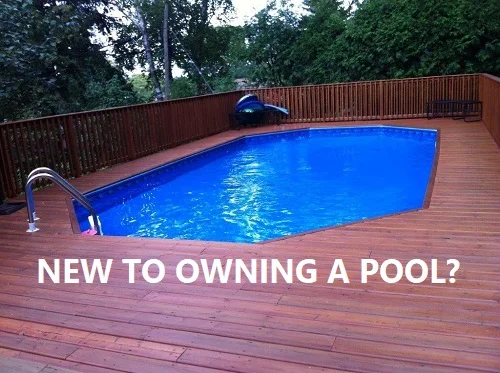 Have you recently had a pool installed, or bought a house with a swimming pool, and you find yourself thinking that you feel completely overwhelmed with where to
start? Caring for and maintaining a new swimming pool can certainly be intimidating to people unfamiliar with this process. The good news is that while there is a
steep learning curve to swimming pool ownership, once you get some of the basics under control you will find that it is a fairly easy process after all.
Have you recently had a pool installed, or bought a house with a swimming pool, and you find yourself thinking that you feel completely overwhelmed with where to
start? Caring for and maintaining a new swimming pool can certainly be intimidating to people unfamiliar with this process. The good news is that while there is a
steep learning curve to swimming pool ownership, once you get some of the basics under control you will find that it is a fairly easy process after all.
This page is long. To help you better contextualize pool maintenance once you understand what you are doing you should have your entire pool care routine down to well under 1 hour per week, inclusive of all chemical maintenance, vacuuming, filter cleaning etc. You should also not have any problems with green water or challenges maintaining your water chemistry. I do not want to claim that swimming pool maintenance is easy. There is a learning curve where it is pretty intimidating in the beginning with a lot to learn, but the actual day to day care of the pool is pretty minimal once you get the hang of it.
Choosing to learn about your swimming pool is the best thing you can do to avoid costly problems and frustrations along the way. If you are not informed, or under
informed about pool care, this is when you can really run into problems.
The information contained here on the www.SwimmingPoolSteve.com website will absolutely help you to better understand your pool and how to care for it. As a starting point the page you are on now should be considered "must read" information to make sure that you have the basics right. You would be surprised to learn how often pool owners do not know what kind of pool they have, or get the pump and filter mixed up. This page will help resolve these mistakes by reviewing the fundamental information that you need to know.


This article is designed to teach you the basics of what you need to know right now as well as point you in the right direction for the areas that you will need to do further research. This is an efficient and effective method to take you from 0 to "pool maintenance expert" as quickly as possible. As a new pool owner you can feel overwhelmed easily because there is so many facets to swimming pool ownership. The main thing that you lack at this stage is the ability to classify an order of importance to what you need to know.
In a worst case scenario if you really get stuck looking for answers you can always ask Steve
What Type Of Pool Do You Have?
There are a few different kinds of swimming pool and you need to know which you have. In ground swimming pools can be vinyl liner, concrete or fiberglass which will
total over 99% of the residential market. The type that you have will determine what kind of care, maintenance and repair costs you will likely experience. An
informed pool owner should obviously know what type of pool they have.
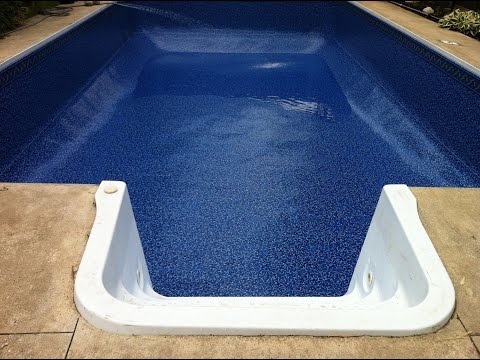
Vinyl liner pools - A vinyl liner pool is a pool that comes in a kit of wall panels. The wall panels are set in place and the floor is typically a smooth mortar concrete over which a vinyl liner is hung from a coping track at the top of the pool wall. Even though the floor is made of concrete this is not a concrete pool - if a vinyl liner covers the interior surface of the pool then it is a vinyl liner pool.
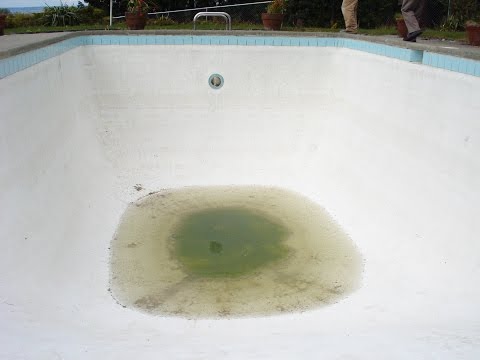
Concrete pools - There are a lot of different terms that can be used, all of which are all methods of describing a concrete pool. Shotcrete pools, cast pools, gunite pools, tile pools and plaster pools, marcite, marblite, quartz, pebble, exposed aggregate and painted pools are all ways of saying the same thing. The difference in terminology, in most cases, simply refers to the method of placement used to get the concrete into the shape of a pool. Ultimately if the shell of the pool and the interior surface of the pool are both made of a concrete or mortar material - then you have a concrete pool.
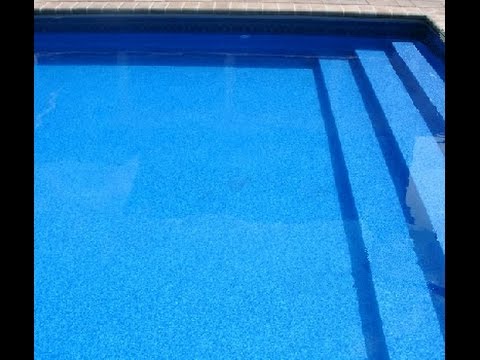
Fiberglass pools - Fiberglass pools are not concrete pools with a fiberglass paint over the interior surface. A fiberglass pool is a pool shell that is entirely comprised of fiberglass and is dropped into the ground as a finished product. A gel coat finish provides the smooth interior surface for the pool.
There are a few other very rare types of pools such as low-hung liner pools, stainless steel pools, container pools and hybrid pools which often have concrete floors but the walls will be wall panels that are painted metal or painted fiberglass. The vast majority of residential pool owners will have a concrete pool, a fiberglass pool or a vinyl liner pool. If you are just not sure still, go and touch the inside of your pool. Like, when you stand in the shallow end of your pool what is the material your feet are touching. Is it a liner? Then you have a liner pool. Is it fiberglass? Then you have a fiberglass pool. The interior surface is the easiest way for you to know what kind of pool you have.
Identifying Pool Equipment
The pump is electrically powered (has a wire connected to it, sits low to the ground) and the filter is like a garbage can. It is big, tall, usually round and does not have power. It just sits there until the pump pushes dirty water through it. Normal order of pool equipment is pump first, filter second and then heater, and then chlorine injection system (chlorinator or salt chlorine generation cell)
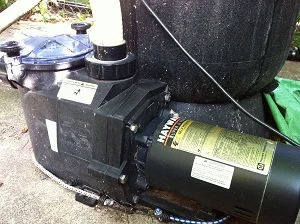
Pool Pumps - The pump is the heart of the pool system. It is electrically powered and serves to suck water from the pool through skimmer and main drain pipes and push water through the filter and back to the pool. The pool pump has an electric motor on one end and a "wet end" chamber on the other end that has pipes going in and out of it. The pump requires regular maintenance in the form of cleaning out the strainer basket in the pump to avoid over-working the pump. If the pump gets too hot it can trip the electrical breaker or potentially develop internal damage in the form of short term and long term symptoms which is why the pump must never be run dry. If you want to learn more about pool pumps including how to figure out which one is the right one for your pool then read this variable speed pool pump review article.
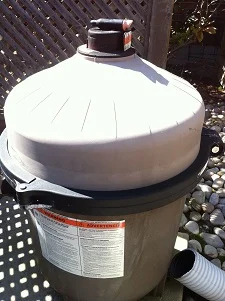
Pool Filters - The pool filter is the large tank / canister that contains a filter media that removes particulate from the pool water. There are 3 common style of pool filter which are silica sand filters, cartridge filters and diatomaceous earth (D.E) filters. Sand filters have hundreds of pounds of sand media and require periodic backwashing which rinses the debris that the filter has removed from the pool. Cartridge filters contain a paper-like cartridge, or series of cartridges, which filter the pool water. Cartridge filters are capable of filtering much finer material than sand filters but also cost considerably more than sand filters. D.E filters remove the finest amount of particulate from swimming pools but also require the greatest amount of maintenance and care which includes bumping, charging and periodic disassembly and cleaning of the internal grids.
Regardless of which type of filter that you have, you will need to pay attention to the operating pressure of the system via the pressure gauge. Increases in pressure are an indication that service is needed. A general rule of thumb is to determine the clean operating pressure of your pool system and then perform filter service (backwashing, cleaning or disassembly) once the pressure of the pool system has increased by 7 psi. Each filter type has a recommended maximum operating pressure of 30 psi. These values are very important to know and remember. Another very important detail that you should know about your pool filter is the maximum designed flow rate that your filter is made to handle. It is likely written on the service label right on your filter. To learn more about pool filters including maximum flow rates for each model you can read this pool filter review article.
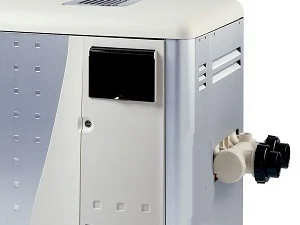
Pool heaters - Gas powered pool heaters are the most common way of heating pool water. These are available to run off of propane or natural gas and range in size from 100,000 BTU to 400,000 BTU with the most common, by far, being 250,000 BTU. New pool owners are often surprised with how much money it costs to run a gas heater. Since gas billing is usually multiple months for billing cycles you can rack up quite a bill before you know it. It is possible to burn thousands of dollars of gas in a few months time. It is important to understand that a large BBQ might be 25,000 BTU so an average pool heater is like having 10 large BBQ's running on full blast. Be sure to balance your pool water as poor chemistry is the #1 killer of gas heaters. To learn more about how to properly care for gas heaters, as well as how to size them for your pool then read this pool heater review article.

Pool heat pumps - A pool heat pump is different from a gas heater. Instead of using gas as a fuel source, a heat pump uses electricity combined with the technology similar to an air conditioner to create an energy transfer that can warm pool water. Ambient air temperature is heated and transferred to the pool water via a heat exchanger system. Similar to a rooftop solar heater more so than a gas heater, a heat pump can not simply heat the water at any time of day or night - it requires specific temperatures in order to work. Even still a heat pump has limitations of performance and will not, in most cases, extend the swimming season - only supplement the in season swimming temperatures. If you live in the right area where electrical costs are low and you have a large amount of warm sunny weather, then a heat pump might be the most efficient method to heat your pool water. If you would like to learn more about heat pumps, how they work and how to find out if one will work on your pool then read this pool heat pump reviews article.
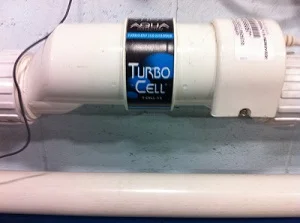
Salt Water Chlorine Generators - Chlorine is a chemical sanitizer used to keep swimming pools clean, clean and safe to swim in. Chlorine comes in many forms from pucks, to powder to liquid to gas. Another form of chlorine is chlorine that you derive from sodium chlorine, or salt. If you add salt to the pool, usually around 3000 parts per million, an electrolysis cell passes a tiny current through the water inside the "salt cell" which causes the sodium to separate from the chlorine. The chlorine kills bacteria and turns back into salt ready to pass through the salt cell again. New pool owners often confuse salt water thinking it is something different from chlorine - it is not. A salt pool is a chlorine pool except you generate your own chlorine as opposed to buying chlorine already processed from salt and ready to go. There is much you should learn about salt water if you have this, or want this, for your pool. Start by reading this article on salt water chlorine to learn if this product is right for your pool.
These are just the most common pieces of equipment that most pools will have. In addition to these items there are many other less common components such as ozone generators, UV lights, erosion feeders, rooftop solar heaters, as well as various automation control systems. Be sure to look over your pool system closely and Google any product names that you do not recognize.
How does a swimming pool work? - A swimming pool is a static body of water and normally those are called swamps. So to prevent swimming pools from being swamps we add filtration systems to move the water and filter (remove) physical debris from the water. In addition to this we also chemically manage the water for a few different variables in order to make the water both safe as well as comfortable for swimmers to use.
Pool skimmers and main drains draw water from the (floor & surface) of the pool to the pool pump. From the pump the water is pushed (pressurized) through the filter, plus any peripheral devices as well like heaters, salt water cells, UV or AOP systems etc. before being returned as clean water back into the body of the pool through the return eyelets. Chlorine is a chemical sanitizer that keeps water safe and pH and alkalinity are maintained to keep water comfortable for our skin and eyes. This is a very brief explanation of pool water chemistry and there are actually a few additional details and nuances which you would need to know. If you want to learn more about this you can check out the pool chemistry crash course.
Pool Water Chemistry & Balancing
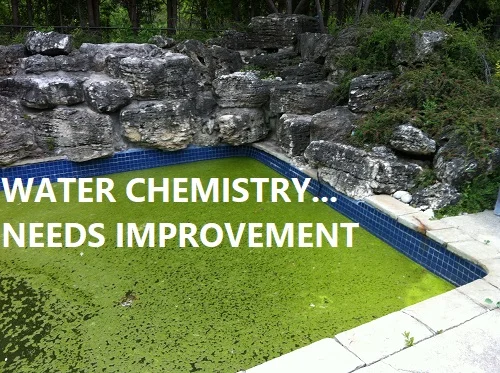
If you are new to owning a swimming pool you are probably aware of balancing water chemistry - you might not be able to do it - but you know about it. A part
of every new pool owners life is learning the ropes for how to balance pool water and how to chemically treat the water so it is clean, clear and safe to swim in.
What you might not know about pool water chemistry is just how important it is:
1) Unbalanced or poorly treated pool & spa water can kill you given the wrong set of circumstances
2) Poorly treated or unbalanced pool water can break your pool equipment, interior surface and entire pool
3) Most causes for frustration, wasted money and down time with the pool will relate to poor water chemistry
Knowing the basics now of just how important water chemistry is to your pool, you would be strongly advised to take the 10 Minute Pool
Chemistry Crash Course. This however is just the starting point for new readers, as indicated in the crash course, you must continue to research pool water
chemistry until such time you know how to interact with your pool in any circumstance. The chemistry aspect to pool care is definitely intimidating on the first read through, but most of what you need to know will come down to four or five common elements. The other dozen or two chemistry values and corrections you need to know about are fairly rare. More than 9 out of every 10 problems with water chemistry are going to boil down to one of those four or five core chemistry readings. Free chlorine, pH, total alkalinity, calcium hardness, combined chlorine as well as CYA (stabilizer). When you have a problem with your water it is most likely going to be a problem with one of these chemistry values being out of range.
Reading in between the lines a little - many pool owners experience frustration in dealing with swimming pool store water labs at some point. Typical complaints would include being sold products that they don't need, following advice from labs only to have the same problems persist, and most commonly talking to people who do not understand water chemistry and balancing themselves. Consider these points further:
What is happening is that there are many overlapping chemicals for pools, in that many chemicals have similar properties or effects, such that you could use one or the other to essentially the same results. For example, there are many different types of algaecide including multiple levels of strength as well as various compounds they are made from such as copper, silver, natural enzymes depending on what tickles your fancy. If the product is an algaecide, it has the ability to kill algae so in theory any of these could potentially work. Strong ones are more money than weaker algaecides but they have harsher side effects. Natural enzymes are more expensive that other types of algaecide because, in theory, they are more healthy for you to swim in. So which would you choose? How about chlorine? Chlorine is an algaecide (sanitizer, oxidizer & algaecide actually) so maybe you didn't even need an algaecide to begin with. As you can see, it would be easy to end up "getting sold something you don't need" but depending on your exact situation, a stronger algaecide than regular chlorine might be in order. The best method to avoid being oversold to is simply be as educated and informed as possible on the subject.
If you start to mix and match pieces of advice from the internet, different pool stores as well as your neighbor then you are much more likely to encounter problems with your water. Once you find someone that really seems to understand the nature of the problem and has a good success ratio with assisting you with your water issues, it would be a good idea to be loyal to their advice. If you talk to a different person every time you have a question about water chemistry then you are almost bound to have a problem sooner or later.
If you have read about sanitizers, oxidizers, pH balance, total alkalinity, calcium hardness, cyanuric acid (stabilizer), phosphates, nitrates, free chlorine, total chlorine, chloramines, breakpoint chlorination and saturation index then you can consider yourself to be at minimum decently informed about pool water chemistry and balancing. To dive deeper on these subjects head over to the pool chemistry guide.
Swimming Pool Maintenance
As a new pool owner everything is new and sometimes the basics about how to interact with your pool are lost. There are some basic rules that you need to follow that
might be too obvious to even make it into standard pool care textbooks - like not letting your pool overflow for example. Or keeping the water level above the mouth
of the skimmer at all times, or that you need to backwash a filter and clean out strainer baskets - with so much to know it can be easy to see how you might have
missed one or two of these required maintenance tasks for your pool.
7 Pool Care Tips is a great video to watch which covers some of the important information that would be easy for new pool owners to miss...stuff that will appreciably make your life easier when maintaining your pool like buying a robotic pool vacuum to help clean the pool of debris as well as scrub the walls and floor all while divorcing the vacuum system from the pool filtration system (a big efficiency improvement). Watch this video for more tips about how to care for your pool better, easier and more efficiently.
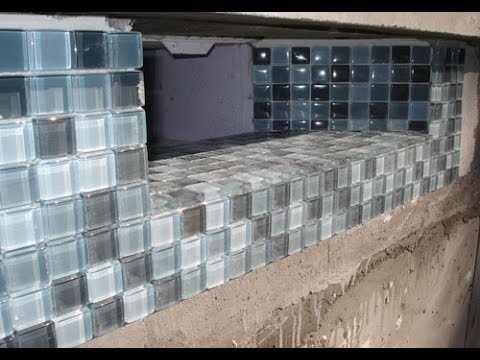
Water Level - The water level in your pool needs to be approximately half way up the face of the skimmer opening. This allows for water levels to go up or down to the maximum deflection without needing intervention. If the water level drops below the mouth of the skimmer then you risk having your pump run dry, overheat and fail. If the water level of the pool is allowed to raise too high (like from a forgotten hose or heavy rains) then water will be escaping the pool system along with your heat and chemicals that you paid for!
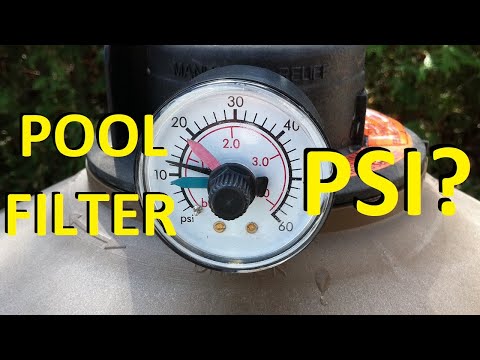
Filter Care - The pool filter you have will need some level of regular maintenance. A cartridge filter needs to be opened and cleaned when the operating pressure of the system rises approximately 7 PSI above the clean operational pressures. A sand filter needs to be backwashed and then rinsed when the operational pressure rises 7 PSI, or on a regular schedule like weekly at minimum. D.E filters require regular dismantling, cleaning, rebuilding and recharging with diatomaceous earth so if you have a D.E filter be sure to read about these processes.
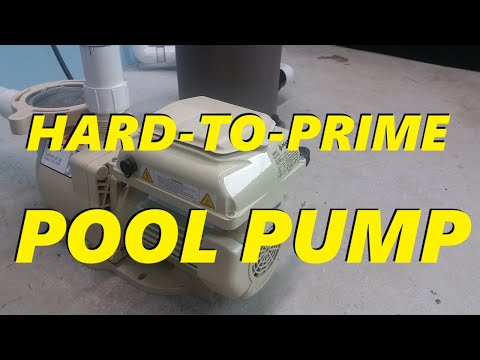
Priming The Pump - A pool pump can never be operated "dry" which means that water must be moving through it to remain cool. Priming the pump involves putting water into the wet end chamber, closing the lid and turning it on. You must monitor the pump to make sure that it actually primes as sometimes you need to repeat this process a few times. If you are having trouble still with priming your pool pump here is a dedicated article about this subject: priming a pool pump troubleshooting guide.
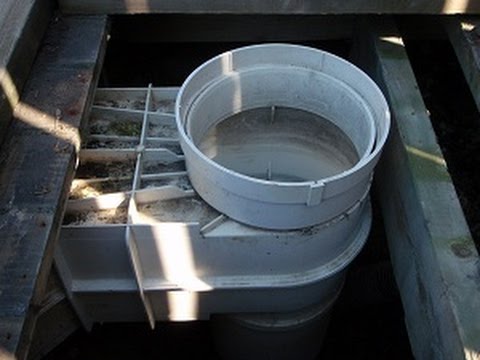
Clean Strainer Baskets - The pump as well as the skimmer will both (should) have strainer baskets. These are to help trap leaves and debris from entering the pool plumbing system or into the pump and filtration equipment where it can become lodged or potentially do damage. During periods where there is a heavy accumulation of debris in the pool these strainer baskets can become extremely full extremely fast - and it is very hard on the pump to run like this. Be sure to regularly check on and clean out all strainer baskets and if yours is cracked or broken then replace it right away.
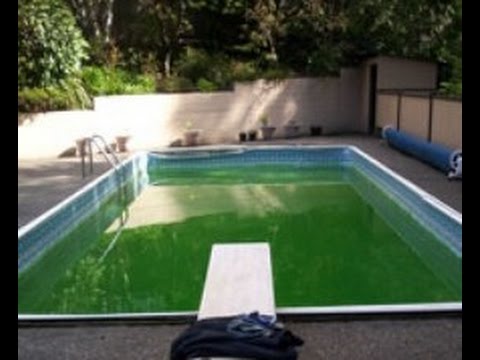
Skimming The Pool - A well designed pool would technically skim itself since there is a slight vortex action to the way a pool circulates. This is how a skimmer is able to skim all of (most of) the debris from the pool surface. A weir door helps to hold the debris within the skimmer should the pump turn off. This does not always work however and manually skimming debris off of your pool is a good idea for multiple reasons. The biggest being that what is a leaf floating on the pool surface right now will eventually be a rotting leave sitting on the floor of your pool where it is much harder to get to.
Vacuuming The Pool - Over and above just having it look nice keeping the floor of your pool free from organic debris is important to help reduce your chlorine demand. Any organic debris like leaves in your pool will use up chlorine in the water and will cumulatively add up to a negative effect on the balance of your pool water. Keep the pool clean of debris for the most predictable and lowest cost chemical maintenance schedule.
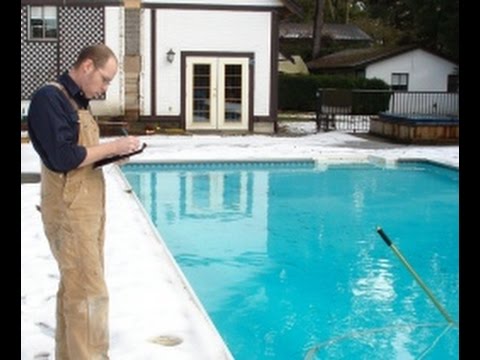
Brushing The Pool - The interior surface of your pool will hold bacteria and organic debris much more than you will find these elements floating in open water. In order to help the pool filtration system do its job you need to brush the entire interior surface of the pool (walls and floor) at least once per week. Be sure that the brush you use is a pool brush made for the type of pool that you have and is in good working order with no missing pieces or sharp things sticking out of it.
Adding Chlorine - Chlorine is only one of the many chemicals that your pool will require in order to stay in balance but possibly it (chlorine) is the most important chemical level you need to maintain in your pool. It is not possible to tell by eye if there is chlorine in the water - a test must be used. You measure chlorine in parts per million (ppm). If you add chlorine to the pool and wait 12-24 hours and the test still says that you have no chlorine this simply means that you have not built up enough chlorine to overcome the bacteria count in the pool yet. There are a few different forms of chlorine which can be used in a pool and there are some differences between them such as the form it comes in (liquid, granular, tab/puck) as well as stabilized chlorine with cyanuric acid in it versus unstabilized chlorine products.
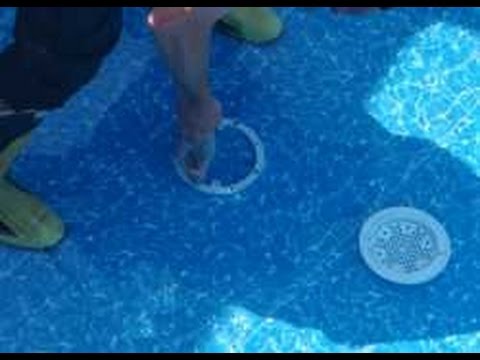
The Thing On The Bottom Of The Pool - The main drain is located on the bottom of the deep end floor in a swimming pool. Contrary to how it sounds it is not actually a drain but instead a suction point that is tied into your filtration and circulation system. Only if you have an isolated pipe that runs directly from the main drain to the pump would you have the ability to drain the pool through the main drain.
Draining The Pool - Swimming pools can only ever be drained under certain conditions and depending on the style that you have you should probably never drain your pool. Draining a vinyl pool will ruin the liner and both fiberglass and concrete pools have the ability to pop out of the ground breaking them permanently. Professionals use experience and local knowledge of ground water conditions to determine when (and how) to most safely drain a pool.
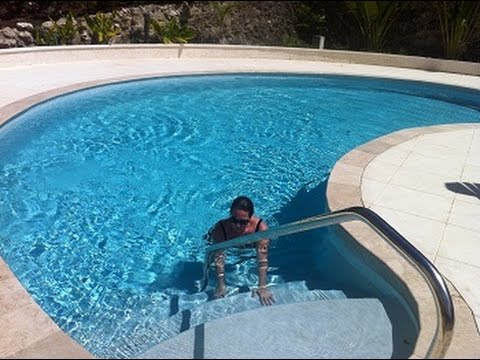
Covering The Pool - A solar cover for your pool will reduce water loss due to evaporation, heat loss and chemical loss by over 50%. It can seem like a lot of work to drag out the solar blanket every evening and put it on the pool but in the long run you will be rewarded financially for doing this. You are not supposed to keep the solar blanket on your pool during the day as this can promote algae growth.

Heating The Pool - Gas heat is very expensive and new pool owners have a tendency to crank up the pool temp to 90 degrees until they get the first gas bill. A $250k BTU pool heater is like having 7 to 10 large family BBQ's running on full blast so they can get very costly very quickly. Set your pool temperature to 80 degrees (26.5 degrees Celsius) and stop whining you baby...it's not that cold! Use of a solar blanket at night will dramatically improve the thermal efficiency of your pool if 80 is simply not enough for you.
How To Avoid Expensive Swimming Pool Repairs

This is especially true with interior surfaces for swimming pools. A new vinyl liner or a new pool plaster is fairly expensive and the most common thing that pool owners will put off for as long as possible. Instead of trying to get the absolute maximum out of your interior surface you would be better advised to replace it / repair it as soon as a problem is detected. The amount of additional work, and money, an interior surface can cost you is simply not worth trying to get "one more season" out of your existing one. The same concept can also be applied to things like pool chemicals and pool maintenance equipment like vacuum heads, brushes and poles. If there is any signs of disrepair be sure to replace or repair these items before using them in the pool again.
Learn about how to reduce your pool heating bill, how to reduce your chlorine and chemical use, and also learn about what you can do to reduce the fluctuations in your pH and total alkalinity levels. If you are interested in reducing your pool operating costs be sure to check out this comparison article and video that shows exactly how variable speed pool pumps save money and how much you can potentially save with them: Variable speed pump savings proof.
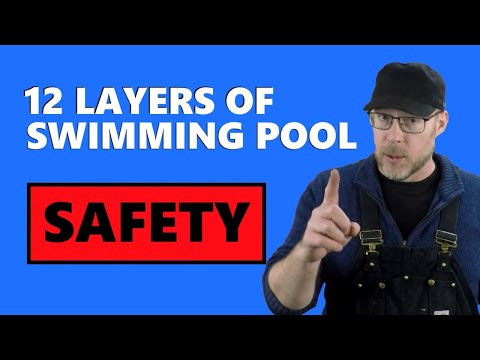
No page for new pool owners could be complete without talking about swimming pool safety. Owning a swimming pool is a liability and you must be diligent to ensure that your pool is safe and secured at all times. While items like pool alarms (of various kinds) do exist they are not a replacement for direct supervision of a pool, or physically restricting access to the pool area.
This video talks about many of the common safety concerns you should have as a pool owner and what you should do to make your pool and pool area as safe as possible. Life saver buoys, recovery hooks for your telescoping pole, signage and safety rules for the pool area are all discussed in this video.
How To Maintain a Pool - Step By Step

The reality is that nobody will care for your pool as well and as thoroughly as you are willing to do because you are the one financially tied to any problems that develop. You have a direct interest in not having your pool and pool equipment fail early, and you are the one who actually swims in the water so making sure it is clean and safe should matter to you more than anyone else. This is why sometimes it is worth it to "fire your pool guy" and start taking care of your pool maintenance yourself!
This page is hardly a comprehensive guide to pool ownership - more a starting point for referencing many of the concepts and best practices that are common within the swimming pool industry and some basic terminology to bring you up to speed. Just having an open mind to the fact that pools are actually pretty complicated and you need to be careful with what you do is important. Much like a car needs maintenance and upkeep or it is going to break and cost you a fortune, swimming pools are similar. If you severely neglect pool maintenance and repairs you can count on experiencing added costs and frustrations that you could have avoided with a more proactive approach to understanding your pool. If you are ready to keep learning you can check out one of these following pool and spa articles:
Fast start guide for pool owners
Top content from www.SwimmingPoolSteve.com
Pool and spa chemistry crash course
New pool owner guide
The Swimming Pool Steve blog
Have a question - ask Steve
Swimming Pool Steve is an award winning, second generation swimming pool specialist from Ontario Canada and one of the most trusted voices in the swimming pool industry. With over 20,000,000 views on the Swimming Pool Steve YouTube Channel, winner of the Pleatco Pool & Spa Industry Leadership award and author of hundreds of pool and spa articles both online and in print. Steve is committed to helping pool and spa owners as well as pool and spa industry workers learn more about the technical side of building, renovating, repairing and maintaining all types of swimming pools and spas. Follow Swimming Pool Steve on Facebook, Twitter and YouTube.
Paid PDF Books From Swimming Pool Steve
 Steve's Pool Survival Guide
The Swimming Pool Steve Pool Survival Guide is intended to help pool owners understand their pool and pool equipment better, understand water chemistry, water testing and chemical corrections to the water, troubleshoot the most common pool problems and have confidence in interacting and caring for their pool in the fastest possible frame of time. Also covers pool safety, things to avoid and how to operate your pool more efficiently.
 Salt Water Recommendations
Are you considering upgrading to salt water in your pool? In this paid PDF Steve talks about which pools should avoid using salt water. Find out concerns about using salt in your pool but also the potential benefits of salt water. Finally hear which specific brand and model of salt chlorine generator Steve thinks is the best option currently available to pool owners and how to choose the right size salt system for your pool.
 New Pool Heater Buyer's Guide
In this guide Swimming Pool Steve will help you to better understand your heater options as well as which would be best suited for your pool. Learn about BTU output and sizing of both gas/propane heaters as well as electric heat pumps for residential swimming pools. You will also learn about which specific brands and models of currently available pool heaters Steve likes to recommend. If you are thinking of adding a new pool heater to your equipment pad this buyer's guide would be a useful resource to help you make a more informed buying decision.
 New Pool Installation Value Guide
This is a value shopping guide written by Swimming Pool Steve to help home owners hiring for a new pool installation to get the maximum value for their investment with tips about how to protect your interests during the vetting, hiring and pool installation process. Anyone serious about having a pool installed will find value in this guide. Pool installers will sell the pool package that is best for them - not for you! Become an informed value shopper with this PDF guide.
Endorsed Brands From Swimming Pool Steve
The following links and products are to affiliates of the Swimming Pool Steve website. These are brands, products and services hand selected by Steve for endorsement. Please note that these endorsements can include monetary compensation, affiliate links and referral fees to Swimming Pool Steve, however there is zero additional cost to you should you use one of these products or services. Income generated from these links helps to keep this pool and spa resource available for everyone. To have your product or service considered for listing here as an endorsed brand email SwimmingPoolSteve@gmail.com.
Amazon Disclosure Statement - As an Amazon Associate I earn from qualifying purchases.

www.PoolPartsToGo.com
New Black + Decker variable speed pumps are available online from www.PoolPartsToGo.com and they are a drop in replacement for many popular pump models including Pentair Superflo and Hayward Super Pumps. With an adjustable platform base, union connections included and a very strong warranty these pumps offer an impressive value to pool owners.
- Swimming Pool Steve