
What Is The Average Pool Size?
SwimmingPoolSteve.com is user-supported. In order to keep this resource about pools and spas available for free to all readers I earn commissions for purchases made through links on this page. For more information see the full disclaimer page. By using this website you are agreeing to the terms and conditions.
If you want to know what the average size for a swimming pool is you might need to define a few qualities about the pool to get the most accurate information. For example, are you looking for average pool sizes historically speaking, or are you asking about how big the average pool being installed today is? Chances are these are going to be two significantly different numbers. Likewise you will find differing information based on whether you are trying to fit a swimming pool into a small backyard versus asking what is the optimal sized swimming pool assuming that you had no yard (or budget) restrictions. In the following article I will try to answer all of these questions for you.
Before diving into pool size and measurements for average pools it is first worth mentioning that there is no perfect swimming pool. That is to say that one size does not fit all when it comes to selecting the best swimming pool for your family. As a swimming pool installation contractor this is my first order of business when I meet with a home owner who is looking to have a pool installed. The first step for me is to identify what your priorities are for your new pool. Are you looking to swim laps every day for the health benefits or do you have multiple young children that you want to burn off energy daily while staying within your own property lines? Perhaps there is someone with a disability in your family and the pool is primarily for therapy purposes...only by identifying your priorities can you then select the best pool to fit your needs. It sounds intuitive enough but contrary to this most people come to the table unprepared or misinformed.
For example, it is extremely common for a home owner to tell me they want to have a pool installed and the pool needs to be salt water. For me installing salt water means an extensive conversation about the advantages and disadvantages of deriving chlorine from salt water. This is summarized in this article I wrote: Get informed about salt water pools. Instead of just saying yes, salt water, I instead ask them why they want salt water. The why is the important part. 9 times out of 10 the answer I get back is that salt water is maintenance free, or someone in the family is allergic to chlorine so it has to be salt water...both of these are untrue statements. In order to help you find the right size of pool you need to first consider what you want to use the pool for. You also want to consider things like how much do you want the pool to cost, both upfront and monthly to operate.

Cost of pool operation - The bigger your pool is the more it will cost to operate monthly. If you prefer to swim in heated water then the consideration for pool size is far more important. Filtering pool water is expensive enough although it is made much cheaper by using a variable speed pool pump however heating pool water with gas or electricity is extremely expensive. If monthly cost of operation is a major concern for you then you need to be acutely aware of how large your pool is. Heating, chemicals and filtration costs all go up the larger your pool is.
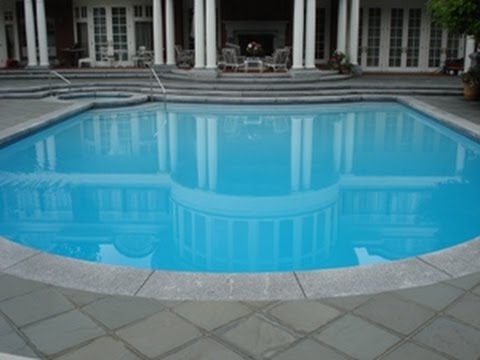
It used to be that bigger is better when it came to swimming pools. This was during the 60's, 70's and 80's when cars were huge, fossil fuels were plentiful and cheap and things were being built to last a lifetime. Properties on average were much larger and as a result larger pools were not obtuse. Monthly operating costs for pools large and small were affordable and so historically speaking the average swimming pool size was large, 20'x40' with a deep end ranging from 8' to 10' deep, if you could afford it. Modern day average swimming pools are much smaller.
While 20'x40' pools are still installed for residential applications, they are now very uncommon. Most backyards are too small for such a large pool, and operating costs for so many gallons of water is prohibitively high for many people. A modern day swimming pool installation ranges from 12'x24' to 16'x32' and deep ends tend to average around only 6' deep or so. Much less depth than previous generations of swimming pool installations.
How To Choose The Right Pool Size?
Identifying your priorities as a pool owner is the secret to choosing the best size of pool. If you like to swim laps and basically you are the only person who uses the pool then why would you pay for four times as much pool as you actually use? A lap pool of 8' in width and a length anywhere from 20' to 40' would provide a perfect swimming experience for your needs with extremely low filtration and water heating costs since the volume of the pool is so much smaller. However a lap pool sure leaves a lot to be desired when it comes to playing volleyball in the pool...more suited to one on one at best since the pool is so narrow. Similarly if games are the main focus and attention for your pool then perhaps a larger pool is in order, but without a deep end. This would keep the total volume of the pool down while maximizing the playing area.
The process of identifying priorities with a new pool installation is just one of the steps involved with building a new swimming pool. Anyone can have a pool installed but getting maximum value for your money is another thing entirely. I even wrote an entire E-book about this exact subject: Getting the most value with a new pool installation but this pertains only to the technical side of how to protect your interests, deal with pool builders and make wise technical decisions for how you want your pool built. If you are trying to decide what pool size you should get consider some of the following common questions that new pool owners ask:
What is the average in-ground pool size? - The average in-ground pool built today is probably 16'x32' which is down significantly from previous decades where "bigger is better" was the conventional attitude. Modern day swimming pool installations need to consider efficiency and cost of operation, and maximizing smaller spaces seems to be the general goal. Pools are generally more shallow than they used to be as well. Diving boards and 8' to 10' deep pools were common in the 70's but "sport pools" and pools with deep ends between 5' and 6' are most common for modern day pool installations. Maximum space for activities with minimal size in gallons.
What is the average pool size in gallons? - The average residential swimming pool size in gallons is 17,280 based on a calculation using a 16'x32' swimming pool that has an average depth of 4.5' ranging from 3.5' in the shallow end to 5.5' in the deep end. By comparison a 20'x40' pool with a 9' deep end would be around 36,000 gallons. Both pools look big when you are standing next to them but you could actually fix two of the 16'x32' pools into the larger pool. Volume is deceptive like this which is why modern day pools are built smaller in order to reduce on filtration, heating and chemical costs associated with huge volume pools.
What is the average above ground pool size? - Above ground pools tend to be smaller in surface area than inground pools but even more so above ground pools have less volume than inground pools because they almost universally lack a deep end. An average above ground pool is around 15'x30' with a constant depth of 4' commonly. While they can also have deep ends they are usually much smaller and shallower than inground pools by comparison. This would put the average above ground pool volume around 13,500 gallons. Round above ground pools are deceptively large for volume and a 24' round above ground pool with a depth of 4' would be around 13,565 gallons.
How deep is an average pool? - Above ground pools tend to be 48" or 4' deep while some can be as much as 52" or even 54" deep. Above ground pools can even have deep ends dug out however this is fairly uncommon. Inground pools are usually 3.5' deep in the shallow end and have an average depth of 5' to 6' in the deep end. This is much less than some people prefer for swimming pool depth, however swimming pools are built smaller on average these days to suit smaller property sizes. Inground pools of 8' to 10' in depth were common in the 70's and 80's but much less common today due to construction costs and maintenance costs, especially heated water costs. Pools 10' to 12' deep or more are extremely uncommon in residential settings and usually old concrete pools are the only ones actually this deep. Interestingly pool owners often think their pool is deeper than it is. This is probably due to the fact that pools look very deep when they are empty, possibly mixed with a little bit of bragging rights. In reality pools are seldom 12' deep and almost no modern day residential pools are that deep.
What is a good pool size for swimming laps? - For swimming laps I prefer to be at minimum 30' in length and 40' would be even better if the property size allows for it. If you are thinking about a lap pool I tend to say that 8' is the minimum width I prefer though I have seen 6' of pool width side to side when space was restricted. Anything less than 30' in length is very short for swimming laps and if you are space restricted then you might consider using a swim jet system, a tether system, or both.
What is a good pool size for games? - A good pool size for playing games is considered to be 16'x32' and you will find that rectangle shaped pools are ideal for this purpose. Rectangles maximize space for things like playing games, volleyball, swimming laps and 32' in length is enough to functionally accommodate most families. If the deep end is relatively shallow such as 5' then this allows for more games space. It is easier to play volleyball if you are not having to tread water at the same time! This is one of the reasons that sport pools are popular which is shallow on both ends with a deeper section in the middle.
How to choose the right swimming pool size for your family comes down to the size of your property, the size of your budget and the scope of your expectations of use for the pool. Since properties are smaller these days you need to consider any build setbacks that may exist in your area. Commonly 3' or 5' minimum distance from the edge of the pool to the property line, depending on where you are located. You also need to consider decking space around your pool. Swimming pools usually have a 3' concrete deck around them. Anything less than 3' of deck space around the pool will be tight for walking access and will definitely not be enough room for chairs or seating of any kind. Also pool safety covers require a minimum of 3' of deck space on average and less than this amount can result in extra charges for reduced deck mount strap configurations. When you consider all of this information the final answer is that the average pool size is 16'x32' with a 3.5' shallow end and a 5.5' deep end and a volume of 17,280 gallons and has a 3' wide concrete deck around the perimeter of the pool.
Top content from www.SwimmingPoolSteve.com
Pool and spa chemistry crash course
New pool owner guide
The Swimming Pool Steve blog
Have a question - ask Steve

Swimming Pool Steve is an award winning, second generation swimming pool specialist from Ontario Canada and one of the most trusted voices in the swimming pool industry. With over 20,000,000 views on the Swimming Pool Steve YouTube Channel, winner of the Pleatco Pool & Spa Industry Leadership award and author of hundreds of pool and spa articles both online and in print. Steve is committed to helping pool and spa owners as well as pool and spa industry workers learn more about the technical side of building, renovating, repairing and maintaining all types of swimming pools and spas. Follow Swimming Pool Steve on Facebook, Twitter and YouTube.
Paid PDF Books From Swimming Pool Steve
 Steve's Pool Survival Guide
The Swimming Pool Steve Pool Survival Guide is intended to help pool owners understand their pool and pool equipment better, understand water chemistry, water testing and chemical corrections to the water, troubleshoot the most common pool problems and have confidence in interacting and caring for their pool in the fastest possible frame of time. Also covers pool safety, things to avoid and how to operate your pool more efficiently.
 Salt Water Recommendations
Are you considering upgrading to salt water in your pool? In this paid PDF Steve talks about which pools should avoid using salt water. Find out concerns about using salt in your pool but also the potential benefits of salt water. Finally hear which specific brand and model of salt chlorine generator Steve thinks is the best option currently available to pool owners and how to choose the right size salt system for your pool.
 New Pool Heater Buyer's Guide
In this guide Swimming Pool Steve will help you to better understand your heater options as well as which would be best suited for your pool. Learn about BTU output and sizing of both gas/propane heaters as well as electric heat pumps for residential swimming pools. You will also learn about which specific brands and models of currently available pool heaters Steve likes to recommend. If you are thinking of adding a new pool heater to your equipment pad this buyer's guide would be a useful resource to help you make a more informed buying decision.
 New Pool Installation Value Guide
This is a value shopping guide written by Swimming Pool Steve to help home owners hiring for a new pool installation to get the maximum value for their investment with tips about how to protect your interests during the vetting, hiring and pool installation process. Anyone serious about having a pool installed will find value in this guide. Pool installers will sell the pool package that is best for them - not for you! Become an informed value shopper with this PDF guide.
Endorsed Brands From Swimming Pool Steve
The following links and products are to affiliates of the Swimming Pool Steve website. These are brands, products and services hand selected by Steve for endorsement. Please note that these endorsements can include monetary compensation, affiliate links and referral fees to Swimming Pool Steve, however there is zero additional cost to you should you use one of these products or services. Income generated from these links helps to keep this pool and spa resource available for everyone. To have your product or service considered for listing here as an endorsed brand email SwimmingPoolSteve@gmail.com.
Amazon Disclosure Statement - As an Amazon Associate I earn from qualifying purchases.

www.PoolPartsToGo.com
New Black + Decker variable speed pumps are available online from www.PoolPartsToGo.com and they are a drop in replacement for many popular pump models including Pentair Superflo and Hayward Super Pumps. With an adjustable platform base, union connections included and a very strong warranty these pumps offer an impressive value to pool owners.
- Swimming Pool Steve