
Do Pools Need A Cover For The Winter?
SwimmingPoolSteve.com is user-supported. In order to keep this resource about pools and spas available for free to all readers I earn commissions for purchases made through links on this page. For more information see the full disclaimer page. By using this website you are agreeing to the terms and conditions.

Do swimming pools need to be covered for the winter season? First we need to identify whether we are talking about a pool that is intended to operate all year long or a pool that is closed for the winter season. There is even some gray area in this statement as some pools are not used in the winter season but the pool is still left to circulate and filter water and you still maintain the water chemistry and basic maintenance like brushing the walls and floor and vacuuming the sunken debris. Many times it can be hard for pool owners to get a straight answer when researching online simply because your geographic location will have a lot to do with how you take care of your pool in the off season. Or if there is an off season at all.
What is the point of covering a pool anyway? Why not just leave the pool as-is all year long no matter where you are located geographically? The short answer to this is that freezing weather will damage pools which have not been prepared properly. So some pools have to be shut down and simply can not be operated through the winter season. In these cases if you were to leave the pool open to the elements and without a cover then you would be unable to keep the pool clean and free of debris. The leaves, bugs, animals an other organic contaminants would cause staining within the pool and very poor water chemistry conditions which could contribute to early failure of components like the interior surface of your pool. For concrete pools that is the plaster, for vinyl pools that is the liner, and for fiberglass pools that is the gelcoat. No matter which kind of pool you have you definitely do not want to cause the early failure or your interior surface due to not using a pool cover.

Pools that experience freezing winter conditions - A great many pools are located in areas that have sub zero winter temperatures. If the temperature were to only be slightly below freezing then you might be able to get away without closing or winterizing but with mid-winter temperatures at -20 to -30 Celsius (-4 to -22 Fahrenheit) for many areas of northern USA and Canada this means that extensive steps need to ne taken to protect the pool, the plumbing lines and all of the equipment from freeze damage. You can read this article about pool freeze damage if you want to learn more about how (and where) pools tend to break from freezing and how you can prevent that damage from happening. When winterizing a swimming pool you need to evacuate all of the water trapped within the plumbing lines as these are especially prone to damage from freezing water. With the filtration system shut down there is no way to filter the water. This means you can not vacuum the pool and you can no longer make chemical corrections to the water. Without the ability to manage the water in terms of chemicals and filtration then leaving the pool open to the elements is a bad idea. Covering the pool helps to isolate the pool water from environmental contaminants such that you can cover it when it is clean and balanced and then re-open in the spring to a still-clean pool. You might not be able to maintain the water chemistry with the pool closed and a cover in place but cold water temperatures drastically slow the rate of organic matter and bacteria growth within the water. If you can isolate your pool water from any further contaminants then you can essentially hold the pool in stasis over the cold winter season and then take the cover back off in the spring when you are ready to start circulating the water and maintaining the pool chemistry. Generally early is better than later as once the sun begins to warm the pool water you will begin to develop algae and organic matter growth even with the isolation cover in place.
Tips for how to close your pool and open to perfectly clear water next spring
Pools too cold to swim but no risk of freezing - If you live in an area that has a winter season but reliably that winter season never really sees freezing temperatures and if you do it would be only briefly and rarely then you can elect to keep your pool open and operating all year. While it might be too cold to swim comfortably, at least without spending a bundle on heating the water, without the risk of freezing there is actually no need to close and winterize your pool. Brief periods of freezing weather can be combated by running your pool system continuously throughout the freeze. This includes things like water features or any pipe that would otherwise have static water sitting within it. Moving water does not freeze easily so it takes colder temperatures and longer sustained periods of freezing weather to cause moving water to freeze solid. This alone will get most pools through an unexpected freeze. When that freeze turns out to be colder and last longer than expected, then you can get something like what was experienced in Texas in 2020 where sustained freezing temperatures combined with power outages to cause pools to freeze and break in record numbers. Things like pump casings, filter tanks and especially valve bodies were bought off the shelves from thousands of miles away including used and junk items which could be salvaged for parts. If you have a pool and you are not worried about a deep winter freeze then you can elect to leave your pool uncovered. This does mean you need to maintain your pool in terms of chemical balancing, brushing, vacuuming etc. but this work should be minimal without swimmers in the pool and lower temperatures slowing down bacteria growth. Most pool owners agree that a covered pool is an eyesore so even if you can not swim most home owners would elect to operate the pool and leave it open and uncovered for the winter.
Pool safety covers - It used to be tarps and water bags (or sand bags) that you used to cover a swimming pool for the winter season. The covers were heavy and thick and the water bags lasted many seasons. Moderns tarps are as thin as a garbage bag and rip in a mild wind. Water bags are broken new out of the box with 20% DOA upon filling for the first time. It used to be worth it to have a tarp and waterbag system. It is not any longer. Almost 30 years ago mesh safety winter covers hit the markets and then have been slowly taking over ever since. They last a very long time, with my personal cover being almost 30 years old and still in service. They are also superior as they can support the weight of a person or an animal that might end up on the cover for some reason. Normally a person or an animal on a pool cover, especially a tarp, is a death sentence. So much so that it made my list of 9 awesome things that you must never do to your pool. A mesh winter cover is superior for securing your pool and suprior for protecting your pool. They also come in solid and mesh variety so there should be a "right cover" for every pool application. I much prefer the light duty mesh covers as they are as light as a feather, easy to install and take off, and do not require a cover pump to continually remove water that is trapped on top. Yes mesh covers let water through, and also light, which means that the pool water can become stained over time. Knowing this you simply close late into the pool season, and then open early to avoid the pool water from turning too green. You can also use a tarp cover under a mesh safety cover to help isolate the pool water from environmental contaminants.
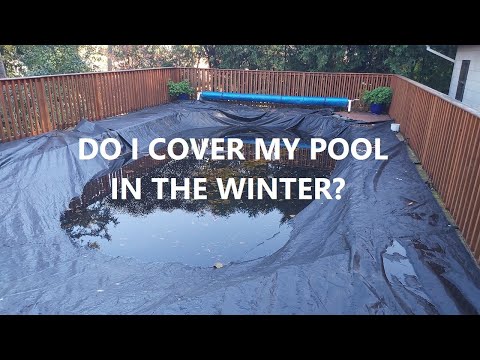
A cover will help to keep your pool clean but it will also help to keep it safe. The amount of extra time and money that you will spend each spring cleaning your pool up will easily pay for the new winter cover over a few years time. Store your winter cover properly and safely away from pests and you could get decades of use from a one time purchase.
Top content from www.SwimmingPoolSteve.com
Pool and spa chemistry crash course
New pool owner guide
The Swimming Pool Steve blog
Have a question - ask Steve

Swimming Pool Steve is an award winning, second generation swimming pool specialist from Ontario Canada and one of the most trusted voices in the swimming pool industry. With over 20,000,000 views on the Swimming Pool Steve YouTube Channel, winner of the Pleatco Pool & Spa Industry Leadership award and author of hundreds of pool and spa articles both online and in print. Steve is committed to helping pool and spa owners as well as pool and spa industry workers learn more about the technical side of building, renovating, repairing and maintaining all types of swimming pools and spas. Follow Swimming Pool Steve on Facebook, Twitter and YouTube.
Paid PDF Books From Swimming Pool Steve
 Steve's Pool Survival Guide
The Swimming Pool Steve Pool Survival Guide is intended to help pool owners understand their pool and pool equipment better, understand water chemistry, water testing and chemical corrections to the water, troubleshoot the most common pool problems and have confidence in interacting and caring for their pool in the fastest possible frame of time. Also covers pool safety, things to avoid and how to operate your pool more efficiently.
 Salt Water Recommendations
Are you considering upgrading to salt water in your pool? In this paid PDF Steve talks about which pools should avoid using salt water. Find out concerns about using salt in your pool but also the potential benefits of salt water. Finally hear which specific brand and model of salt chlorine generator Steve thinks is the best option currently available to pool owners and how to choose the right size salt system for your pool.
 New Pool Heater Buyer's Guide
In this guide Swimming Pool Steve will help you to better understand your heater options as well as which would be best suited for your pool. Learn about BTU output and sizing of both gas/propane heaters as well as electric heat pumps for residential swimming pools. You will also learn about which specific brands and models of currently available pool heaters Steve likes to recommend. If you are thinking of adding a new pool heater to your equipment pad this buyer's guide would be a useful resource to help you make a more informed buying decision.
 New Pool Installation Value Guide
This is a value shopping guide written by Swimming Pool Steve to help home owners hiring for a new pool installation to get the maximum value for their investment with tips about how to protect your interests during the vetting, hiring and pool installation process. Anyone serious about having a pool installed will find value in this guide. Pool installers will sell the pool package that is best for them - not for you! Become an informed value shopper with this PDF guide.
Endorsed Brands From Swimming Pool Steve
The following links and products are to affiliates of the Swimming Pool Steve website. These are brands, products and services hand selected by Steve for endorsement. Please note that these endorsements can include monetary compensation, affiliate links and referral fees to Swimming Pool Steve, however there is zero additional cost to you should you use one of these products or services. Income generated from these links helps to keep this pool and spa resource available for everyone. To have your product or service considered for listing here as an endorsed brand email SwimmingPoolSteve@gmail.com.
Amazon Disclosure Statement - As an Amazon Associate I earn from qualifying purchases.

www.PoolPartsToGo.com
New Black + Decker variable speed pumps are available online from www.PoolPartsToGo.com and they are a drop in replacement for many popular pump models including Pentair Superflo and Hayward Super Pumps. With an adjustable platform base, union connections included and a very strong warranty these pumps offer an impressive value to pool owners.
- Swimming Pool Steve