
What Pressure Should My Pool Filter Be?
SwimmingPoolSteve.com is user-supported. In order to keep this resource about pools and spas available for free to all readers I earn commissions for purchases made through links on this page. For more information see the full disclaimer page. By using this website you are agreeing to the terms and conditions.
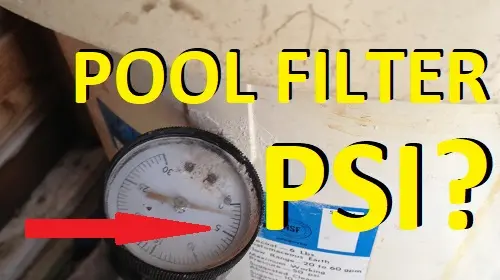
When you ask the question "what pressure should my pool filter be?" it is impossible to answer this in a meaningful way except to say that your filter pressure should be less than 30 PSI. 30 PSI is the maximum operating pressure for almost all brands, makes and models of swimming pool equipment. You should never operate a pool system in excess of 30 PSI so certainly yours should be less than this number. However, aside from this safety tip about maximum operating pressure there is a very specific reason why I can not give you any more information about what your filter pressure should be.
The reason why I (or anybody else) can not tell you what your filter pressure should be is because your pool is entirely unique. There are no two pools built exactly alike. The number of pipes you have, the size of the pipes, the size and type of pump, filter, and peripheral equipment you have, the length of the pipe runs, the height of the pump relative to the pool water level...all of these things would change the pressure that your filter is (and should be) so without knowing about your exact pool then nobody can tell you what your filter pressure should be. So let's look more closely at what I can tell you about what your filter pressure should be:

Every swimming pool is unique so your exact ideal filter pressure is unknown. What is known is that 0 to 30 PSI is your instrumentation scale for pool pressure, and lower is better than higher in terms of system efficiency. High pressure indicates a higher resistance to flow in the system. A lower pressure indicates less resistance to flow which translates to efficiency in terms of fewer losses to friction and turbulence in the pipes, and less obstacles to restrict flow within the system. The better you design a plumbing system in terms of larger pipe sizes, fewer fittings and twists / turns in the pipes the more efficient the system will be and the lower the normal operating filter pressure.
Clean operating filter pressure - Every swimming pool is unique. You need to learn what your "clean operational pressure" is for your system. This means cleaning the filter media and then operating the pump in the normal way that you do (if you have multiple speeds it would be the maximum speed that you operate the pool). With the filter recently cleaned we now know the clean operational pressure of your unique pool system. It will be somewhere from 0 to 30 PSI, with lowering being optimal. Now you are able to know when your filter is starting to get dirty. On average you would clean your filter again when the pressure of your system rises 7 to 10 PSI above your clean operational pressure (but never over 30 PSI). You do not have to wait that long. This represents the longest you should wait but if you want to clean your filter sooner you can and it will only serve to help improve your system flow efficiency.
Beware of broken filter gauges - Pool filter gauges are not long lasting devices. They are cheap and last a little while befor ultimately failing for one reason or another. It is common to need to replace pool filter gauges often. If you suspect your filter gauge is not reading accurately then this is commonly tested by turning off the pool system and then removing the gauge from the filter. It should reset to zero when you remove it from the system. If it reads any other number than zero then it is defective and garbage. Replace with a new one using a thread sealant like teflon tape. Be warned to not bottom out the gauge when threading it back in. Perhaps hand tight plus 1/4 turn with a wrench. The flange receiver is plastic and it is very easy to crack pool equipment overtightening threaded connections. The pressure gauge is brass on the threads and can definitely crack the filter if you tighten it too much.
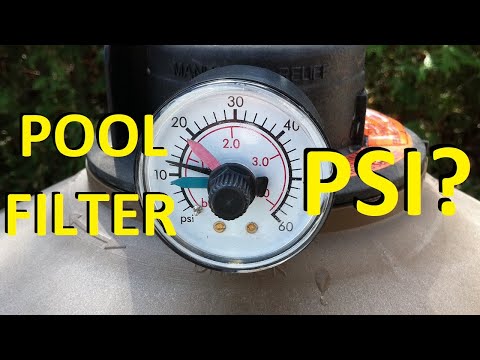
So while there is no specific numerical PSI that your pool filter should be at least now you know the safe operating range of 0 to 30 PSI and that all pool systems are different and that is why nobody can tell you what your pressure should be. Only that lower is better than higher, and that you should learn the clean operational pressure of your specific system so that you can know when your filter is dirty and needing to be cleaned.
Resistance to flow is measured as head in pools, specifically feet of head, like 30 or 60 for example. 30 to 60 feet of head resistance are real world numbers for what an average inground pool might be in terms of TDH, or total dynamic head if you were to measure it on your pool system. This information is useful to know as you can look up the pump brand and model (performance curve) and compare flow rate versus TDH. If you know that your pool is 60 feet TDH then you can also know the exact flow rate the pump is able to generate under that exact condition. This is how you design pool systems and ensure that a pump is sized suitably to a pool system. If you have a pool filter pressure that is too high it could be from a lot of resistance to flow in the pipes, but it also could be from a pool pump (motor) which is too powerful for your specific pool system. This is unfortunately fairly common, especially with the aftermarket pumps that sometimes get installed. People tend to shop with a bigger must be better approach to pool pumps and that is definitely not the right approach!
Learn more about pool pump sizing
More in depth info about pool filter pressure
Top content from www.SwimmingPoolSteve.com
Pool and spa chemistry crash course
New pool owner guide
The Swimming Pool Steve blog
Have a question - ask Steve

Swimming Pool Steve is an award winning, second generation swimming pool specialist from Ontario Canada and one of the most trusted voices in the swimming pool industry. With over 20,000,000 views on the Swimming Pool Steve YouTube Channel, winner of the Pleatco Pool & Spa Industry Leadership award and author of hundreds of pool and spa articles both online and in print. Steve is committed to helping pool and spa owners as well as pool and spa industry workers learn more about the technical side of building, renovating, repairing and maintaining all types of swimming pools and spas. Follow Swimming Pool Steve on Facebook, Twitter and YouTube.
Paid PDF Books From Swimming Pool Steve
 Steve's Pool Survival Guide
The Swimming Pool Steve Pool Survival Guide is intended to help pool owners understand their pool and pool equipment better, understand water chemistry, water testing and chemical corrections to the water, troubleshoot the most common pool problems and have confidence in interacting and caring for their pool in the fastest possible frame of time. Also covers pool safety, things to avoid and how to operate your pool more efficiently.
 Salt Water Recommendations
Are you considering upgrading to salt water in your pool? In this paid PDF Steve talks about which pools should avoid using salt water. Find out concerns about using salt in your pool but also the potential benefits of salt water. Finally hear which specific brand and model of salt chlorine generator Steve thinks is the best option currently available to pool owners and how to choose the right size salt system for your pool.
 New Pool Heater Buyer's Guide
In this guide Swimming Pool Steve will help you to better understand your heater options as well as which would be best suited for your pool. Learn about BTU output and sizing of both gas/propane heaters as well as electric heat pumps for residential swimming pools. You will also learn about which specific brands and models of currently available pool heaters Steve likes to recommend. If you are thinking of adding a new pool heater to your equipment pad this buyer's guide would be a useful resource to help you make a more informed buying decision.
 New Pool Installation Value Guide
This is a value shopping guide written by Swimming Pool Steve to help home owners hiring for a new pool installation to get the maximum value for their investment with tips about how to protect your interests during the vetting, hiring and pool installation process. Anyone serious about having a pool installed will find value in this guide. Pool installers will sell the pool package that is best for them - not for you! Become an informed value shopper with this PDF guide.
Endorsed Brands From Swimming Pool Steve
The following links and products are to affiliates of the Swimming Pool Steve website. These are brands, products and services hand selected by Steve for endorsement. Please note that these endorsements can include monetary compensation, affiliate links and referral fees to Swimming Pool Steve, however there is zero additional cost to you should you use one of these products or services. Income generated from these links helps to keep this pool and spa resource available for everyone. To have your product or service considered for listing here as an endorsed brand email SwimmingPoolSteve@gmail.com.
Amazon Disclosure Statement - As an Amazon Associate I earn from qualifying purchases.

www.PoolPartsToGo.com
New Black + Decker variable speed pumps are available online from www.PoolPartsToGo.com and they are a drop in replacement for many popular pump models including Pentair Superflo and Hayward Super Pumps. With an adjustable platform base, union connections included and a very strong warranty these pumps offer an impressive value to pool owners.
- Swimming Pool Steve