
Pool Liner Wrinkles
SwimmingPoolSteve.com is user-supported. In order to keep this resource about pools and spas available for free to all readers I earn commissions for purchases made through links on this page. For more information see the full disclaimer page. By using this website you are agreeing to the terms and conditions.

If you have a vinyl liner swimming pool one of the biggest concerns (other than a hole) is having wrinkles in the liner. Pool liner wrinkles can happen for a number
of different reasons. They can develop suddenly, or slowly over a long period of time. Wrinkles can also happen when the liner is first installed if the liner is not
measured correctly, manufactured correctly or it is oriented poorly during the installation. Regardless of the reason why you have wrinkles in your pool you will
find the cause for, and solution to your problem within this page. The information about pool liner wrinkles on this page applies to both inground as well as
aboveground pools.
The good news about having wrinkles in your liner is that in most cases this is not an immediate concern for leaking. Many pool liners live their entire life with a
few wrinkles (and sometimes wrinkles everywhere) and while this is obviously not ideal it might be something you can live with. Wrinkles and creases in a vinyl liner
will trap dirt and debris which will work against your free chlorine reserve. Wrinkles also would be prone to developing holes since they are physically raised above
the surface of the pool which makes them a perfect catch for your toe, or for an automatic pool cleaner to get hung up on. While these are concerns most pool
wrinkles will never develop into a bigger problem than just being a cosmetic deficiency. Does that mean that you should not worry about wrinkles in your pool liner?
Not exactly...first you need to determine why you have a wrinkle in your liner. It could be that you have a more serious problem developing and the wrinkle in
your liner is a symptom of this. In order to determine if your wrinkle is an indication of a bigger problem you need to determine what kind of wrinkle that you have.
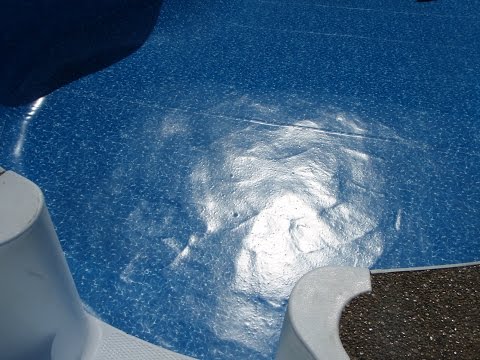
** The picture above shows a wrinkle in a vinyl liner due to a chemical reaction of a concrete product used to patch the floor of the pool which is not compatible with vinyl liners. If you have something that looks like growing patches under your liner you should read this article about concrete mixes for use with pools that will explain why this is happening.

Wrinkles In A New Pool Liner
If you have a pool liner that was not measured well, not manufactured correctly or not oriented in the pool properly during installation this can be the cause of
wrinkles. Wrinkles in a new pool liner installation are not considered a necessary evil. Wrinkles in a new pool liner are a clear indication that something went
wrong. A new pool liner should be 100% absolutely free of wrinkles on every surface. Some pools are much more challenging than others to install without wrinkles
however wrinkles should still be considered an installation error. Even if the manufacturer is responsible for the error in the liner, the onus is on the installer to
notice this and stop the installation unless they are able to lose the wrinkles by adjusting the orientation of the fit while the liner is under vacuum. If you are not
familiar with how a vinyl liner is installed it might be helpful for you to familiarize yourself with the process with this detailed tutorial about how to install a pool liner.
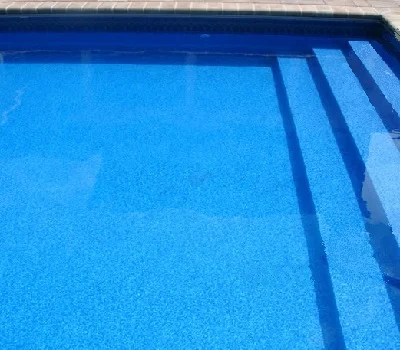
Wrinkles On Vinyl Over Steel Steps
 There are some services where you can have a wrinkle (or wrinkles) in your liner cut out and professionally reseamed. For a new liner installation I would be not
inclined to go this route. While professional vinyl welders can do an amazing job at cutting out and repairing large liner sections on-site, a brand new liner should
not need this. If your installer has recommended that a mobile vinyl welder comes out to resolve your problem with wrinkles in the liner I would not likely agree to
this. If you are a professional in the industry there should be no problem to install any size, shape or orientation of pool liner wrinkle free. The only possible
exception that I would grant for this is in the case of vinyl-over-steel steps. Vinyl over steel interior steps are becoming very popular in recent years, especially
given the staggering cost of having resin in-wall steps installed (which always gives pool owners sticker shock from the price). Vinyl over steel stairs are about 50%
- 60% the price of in-wall steps and do not require alterations to the pool deck. The downside with vinyl over steel steps, aside from that they are slippery (even
with the textured vinyl option), is that they are very difficult to install without wrinkles. Wrinkles in even well measured vinyl over steel steps are so common that
many manufacturers do not even try to remotely make the liner to fit. They simply send a regular liner for the pool with no alterations for the step, along with an
extra roll of matching vinyl material. With these liner manufacturers the process is to have a mobile vinyl welder finish the installation on every job. This is far
from ideal, but reduces the occurrence of wrinkles around the steps. The extra steps involved in this process bring the price of the liner installation up and lowers
the quality of the liner installation as a whole in my opinion. Many liner installation companies who offer vinyl over steel steps now simply warn against the
potential for small wrinkles around the stairs. It is considered a risk of this type of vinyl installation and one that the pool owner assumes should they want to go
in this direction. Obviously, you must have a lot of trust in your liner installer if you are willing to sign a contract stating that wrinkles around the steps are
beyond the installers control.
There are some services where you can have a wrinkle (or wrinkles) in your liner cut out and professionally reseamed. For a new liner installation I would be not
inclined to go this route. While professional vinyl welders can do an amazing job at cutting out and repairing large liner sections on-site, a brand new liner should
not need this. If your installer has recommended that a mobile vinyl welder comes out to resolve your problem with wrinkles in the liner I would not likely agree to
this. If you are a professional in the industry there should be no problem to install any size, shape or orientation of pool liner wrinkle free. The only possible
exception that I would grant for this is in the case of vinyl-over-steel steps. Vinyl over steel interior steps are becoming very popular in recent years, especially
given the staggering cost of having resin in-wall steps installed (which always gives pool owners sticker shock from the price). Vinyl over steel stairs are about 50%
- 60% the price of in-wall steps and do not require alterations to the pool deck. The downside with vinyl over steel steps, aside from that they are slippery (even
with the textured vinyl option), is that they are very difficult to install without wrinkles. Wrinkles in even well measured vinyl over steel steps are so common that
many manufacturers do not even try to remotely make the liner to fit. They simply send a regular liner for the pool with no alterations for the step, along with an
extra roll of matching vinyl material. With these liner manufacturers the process is to have a mobile vinyl welder finish the installation on every job. This is far
from ideal, but reduces the occurrence of wrinkles around the steps. The extra steps involved in this process bring the price of the liner installation up and lowers
the quality of the liner installation as a whole in my opinion. Many liner installation companies who offer vinyl over steel steps now simply warn against the
potential for small wrinkles around the stairs. It is considered a risk of this type of vinyl installation and one that the pool owner assumes should they want to go
in this direction. Obviously, you must have a lot of trust in your liner installer if you are willing to sign a contract stating that wrinkles around the steps are
beyond the installers control.
On a new liner installation any wrinkles in the floor must be removed before the water covers them (or while there is only an few inches of water on the wrinkle).
After this point the weight of the water prevents you from manipulating the wrinkle further. A plunger is one of the only methods to removing a wrinkle that is deep
underwater and even this is a very cumbersome and difficult process that will produce varying degrees of success. Wrinkles under the return fittings, skimmer
faceplate, light flange or in-wall step flange are an indication that the liner has shifted or stretched after the faceplate has been installed. The right time to
install a faceplate on a new liner is once the liner has stopped stretching and shifting. As the pool fills the water will stretch the vinyl. Since liner
installations are a very thin margin job in most places, where speed is the name of the game, many installers short cut by installing all of the faceplates and gaskets
before the pool is full. While it is possible to do this without (almost) any negative consequences, cutting in the fittings while the liner is still dry increases
the potential for stretching of the liner and wrinkles underneath the fittings. There is no fix for wrinkles under fittings other than to cut and weld in new vinyl in
these areas.
Wrinkles From A Floating Liner
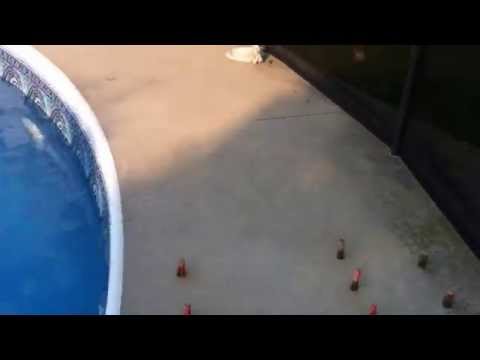
A floating pool liner is a problem and many times this can be fixed by pumping the water from behind the liner back into the pool. If the water under the liner was from a one time event this may very well solve the problem. If the pool is losing water after a new liner installation, plus you are seeing evidence of a floating liner, then you may have a separated seam somewhere in the liner. Also, you could have a leak around one of the flanges such as the stairs, lights, returns or skimmer. Pumping the water down from behind the liner might help the liner to sit back down but in doing so this will very likely result in wrinkles. When the liner is initially installed it must be manually manipulated into position. Once the liner is floating you are at the mercy of gravity for where the liner ends up sitting. In a best case scenario you may be able to get in the pool and manually work the wrinkles towards the edges of the pool with a toilet plunger as you pump from behind the liner. If you need weight in the pool to help hold the liner in certain places like at the shallow end break where the long slope begins, you can use bags of pool salt. Salt is better for the pool than sand and will not harm anything. Once you are finished using it as a weight just take the bag out of your pool and let it drain out. Very little salt will actually end up in your pool water and having some weight to use can be extremely helpful in losing wrinkles.
Wrinkles Under Pool Returns
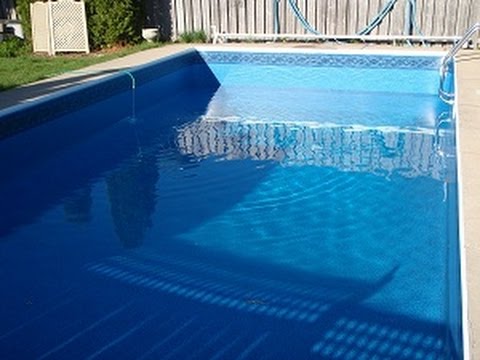
One of the bigger concerns if you notice that you have wrinkles under your return fittings is that there is the potential for a leak to have developed from this stretching. If you have this problem with your pool then you need to very closely inspect the underside of the flange. What you are looking for is any sign that the liner has actually pulled out, or ripped, away from the flange. Sometimes the pull on the liner is so great that the liner can stretch right out the bottom of the flange. If this is the case you should be able to see (or feel) this problem starting from where the screw holes for the flange are as the liner is weakest in this location from the screw holes. Patching a leak found in a location like this would be tough and most likely require a larger patch job that involves removing the return faceplate completely and welding on an oversized patch over the whole return area.
What Causes Wrinkles In Pools?
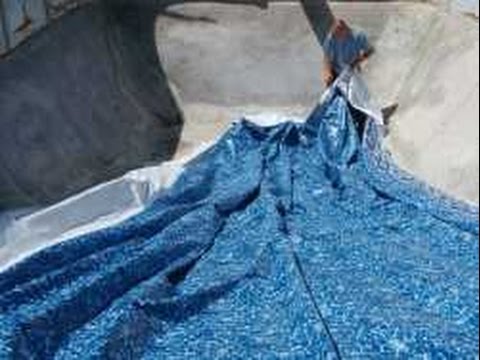
If you, admittedly, do not know how to balance your pool chemistry then you might like to read the pool chemistry crash course that I wrote. There are literally hundreds of resource available online to help you learn how to balance your pool chemistry and I am sure there are others that are more detailed or more scientifically accurate. In this chemistry crash course I tried to compress the information into a palatable version that will help you to get your head around the core principles.
Low pH Levels - Low pH levels are responsible for a phenomena known as "pH wrinkles". If the pH in the pool falls too low this causes a chemical reaction in the vinyl material your liner is made from. The result is that the liner absorbs water which results in a net increase in the total size of the liner. Where the liner once fit perfectly in the pool, now there is simply too much liner everywhere. Small wrinkles only a few inches long will develop on every surface of the pool and number from dozens to hundreds in total.
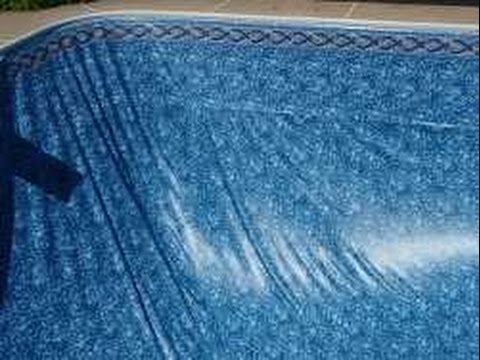
High Sanitizer Levels - In addition to low pH causing the liner to absorb water, so will high sanitizer levels. At levels above 5 ppm chlorine your liner will begin to absorb water. When the sanitizer level exceeds 25 to 30 ppm a significant amount of water will begin to be absorbed by the liner. As the liner increases in size it will eventually erupt into small wrinkles that will not go away once the sanitizer levels normalize. Obviously there are other concerns to having sanitizer levels so high in your pool however ruining the liner is one of the bigger costs associated with this type of chemical imbalance issue.
** High sanitizer levels in addition to low pH levels is one of the worst chemical conditions that you can subject your pool to. The liner is very likely to sustain permanent damage and low pH combined with high sanitizer will aggressively attack the internals of your heater.
How To Fix Pool Wrinkles
Step one in fixing this problem is to identify why you have wrinkles. If the wrinkles are a result of a chemistry issue then you will not likely find the answer that
you are hoping to find here - you will eventually need a new liner. Other forms of wrinkles in pools can be dealt with, at least to a certain degree, by manually
manipulating the liner. When there is water under the liner it is easy to move wrinkles around with your feet or with a toilet plunger. Once the water has receded
the liner will now be stuck in place on the floor under the weight of the water sitting on it in addition to the suction of the wet liner sitting on smooth concrete.
When you use a plunger to move wrinkles you would depress and then lift the plunger slightly while pushing the plunger sideways with your foot. You might get an inch
or two of movement before the plunger slips off and you need to reset it. Also, the liner itself will have a memory and sometimes the liner will move but as soon as
you let go the wrinkle returns back to its original position. This is the type of wrinkle that is easy to solve when the liner is first installed but challenging to
remove once there is water weight on the liner. The best you can hope to do with a problem like this is to slowly work the wrinkles towards the edges of the pool
where you can hopefully try to lose it in the cove.
Wrinkles on the wall of a vinyl liner pool are usually a result of a liner that has shifted while water was under it, but has now settled since the water has receded.
If this is the case it can be very hard to move the wrinkles as they will be inclined to return to their original spot. If you remove the liner from the coping track
in this area (use boiling water to help) then you can stuff a garden hose down behind the liner. If you run water behind the liner directly above where the wrinkle
is, even for a few moments, this can be enough to help get the liner to sit flat against the wall since the wrinkles will respond better to manual manipulation.
Top content from www.SwimmingPoolSteve.com
Pool and spa chemistry crash course
New pool owner guide
The Swimming Pool Steve blog
Have a question - ask Steve

Swimming Pool Steve is an award winning, second generation swimming pool specialist from Ontario Canada and one of the most trusted voices in the swimming pool industry. With over 20,000,000 views on the Swimming Pool Steve YouTube Channel, winner of the Pleatco Pool & Spa Industry Leadership award and author of hundreds of pool and spa articles both online and in print. Steve is committed to helping pool and spa owners as well as pool and spa industry workers learn more about the technical side of building, renovating, repairing and maintaining all types of swimming pools and spas. Follow Swimming Pool Steve on Facebook, Twitter and YouTube.
Paid PDF Books From Swimming Pool Steve
 Steve's Pool Survival Guide
The Swimming Pool Steve Pool Survival Guide is intended to help pool owners understand their pool and pool equipment better, understand water chemistry, water testing and chemical corrections to the water, troubleshoot the most common pool problems and have confidence in interacting and caring for their pool in the fastest possible frame of time. Also covers pool safety, things to avoid and how to operate your pool more efficiently.
 Salt Water Recommendations
Are you considering upgrading to salt water in your pool? In this paid PDF Steve talks about which pools should avoid using salt water. Find out concerns about using salt in your pool but also the potential benefits of salt water. Finally hear which specific brand and model of salt chlorine generator Steve thinks is the best option currently available to pool owners and how to choose the right size salt system for your pool.
 New Pool Heater Buyer's Guide
In this guide Swimming Pool Steve will help you to better understand your heater options as well as which would be best suited for your pool. Learn about BTU output and sizing of both gas/propane heaters as well as electric heat pumps for residential swimming pools. You will also learn about which specific brands and models of currently available pool heaters Steve likes to recommend. If you are thinking of adding a new pool heater to your equipment pad this buyer's guide would be a useful resource to help you make a more informed buying decision.
 New Pool Installation Value Guide
This is a value shopping guide written by Swimming Pool Steve to help home owners hiring for a new pool installation to get the maximum value for their investment with tips about how to protect your interests during the vetting, hiring and pool installation process. Anyone serious about having a pool installed will find value in this guide. Pool installers will sell the pool package that is best for them - not for you! Become an informed value shopper with this PDF guide.
Endorsed Brands From Swimming Pool Steve
The following links and products are to affiliates of the Swimming Pool Steve website. These are brands, products and services hand selected by Steve for endorsement. Please note that these endorsements can include monetary compensation, affiliate links and referral fees to Swimming Pool Steve, however there is zero additional cost to you should you use one of these products or services. Income generated from these links helps to keep this pool and spa resource available for everyone. To have your product or service considered for listing here as an endorsed brand email SwimmingPoolSteve@gmail.com.
Amazon Disclosure Statement - As an Amazon Associate I earn from qualifying purchases.

www.PoolPartsToGo.com
New Black + Decker variable speed pumps are available online from www.PoolPartsToGo.com and they are a drop in replacement for many popular pump models including Pentair Superflo and Hayward Super Pumps. With an adjustable platform base, union connections included and a very strong warranty these pumps offer an impressive value to pool owners.
- Swimming Pool Steve