
Why You Should NEVER Drain a Pool
SwimmingPoolSteve.com is user-supported. In order to keep this resource about pools and spas available for free to all readers I earn commissions for purchases made through links on this page. For more information see the full disclaimer page. By using this website you are agreeing to the terms and conditions.

Did you know that no matter what kind of swimming pool you have you should never drain it? For many pool owners this may come as somewhat of a surprise given that they have seen pools be drained of perhaps even have drained their own pool previously and everything was fine afterwards...so what is the big deal? In a word, risk. Pools are not meant to be drained. Draining a pool often will require some planning in advance, choosing of the right time / opportunity to drain it, and further steps may be needed in order to reduce the potential risk of damage to the pool.
So how much risk are we talking here? Is it a serious risk, or just one of those things that everybody ignores? Well, as someone who has spent over 30 years professionally dealing with pools, including draining them of all types, sizes and descriptions, I can easily say that the average pool owner has almost no appreciation for the amount of consideration that is given to every pool before the decision to drain it is made. If you do it wrong, or at the wrong time, or to the wrong pool, you can destroy the entire pool beyond any hope of repair. So yeah, I would say the stakes are pretty high. Were you aware you were risking your entire swimming pool every time that you drain it? If you are in the habit of draining your pool whenever you feel like it then you are blindly walking into traffic...and one day you might end up paying a hefty price.

Ground water conditions for draining a pool - Every pool type will have unique considerations for what you need to do before you can safely drain it. But something that pretty much all pools need to be wary of is both ground water tables as well as the potential for inclemant weather conditions. A pool that might have otherwise survived being drained could end up destroyed within the hour if a flash downpour or prolonged heavy rains happen while it is empty. Pools, all pools, require water in them to help stabilize them hydraulically in the ground and oppose the forces pushing in on the walls. The ground water table around the pool is of specific concern for concrete and fiberglass pools since high ground water around the pool will push upwards on the pool shell itself. There is a system in these pools to help aleviate building hydrostatic pressure, which is the hydrostatic relief valve located in the main drain which will allow water from the ground into the pool in the event that water pressure builds up. However, this is designed to work in a pool full or almost full of water. An empty pool experiencing strong hydrostatic forces will likely fail to let enough water into the pool, quickly enough, to prevent cracking or lifting of the entire pool shell. In addition to choosing your time to drain a pool wisely, like predictably dry times of year for example, you also often have to make attempts to control the ground water around the pool with sump wells and pumps to evacuate water from around the pool. Commonly you might run a sump pump for a few days in advance of beginning to drain the pool to help lower water tables in the immediate vicinity of the pool. Even still in some areas it is commonplace to need to drill holes into the floor (to be patched later) to allieviate the hydrostatic forces as you are draining the pool.
Draining a concrete pool - While concrete is inherently very heavy it is not so heavy as to remain in the ground if you drain one while there is hydrostatic pressure under it. Essentially you turn your concrete pool into a concrete boat. I assure you that you do not want this to happen to you. We see this every year in the pool industry from pool owners who decided to clean their pool in the spring. Usually you do not even get it fully empty before it lifts permanently a few feet out of the ground. Even if you have drained your concrete pool before you are asking for trouble doing this and I would strongly encourage you to consult with a professional before electing to drain your concrete pool. While the structure of a concrete pool is strong enough to resist the forces of the walls pushing in when it is empty, a different concern is that the interior surface of a concrete pool, commonly plaster or pebble, is something that is made to be constantly submerged in water. Letting your concrete pool interior surface dry out, even for a day, can cause small or even widespread delamination of the plaster surface from the substrate shell. The shell and the interior surface layer are differing materials and they have different rates of expansion and contraction when exposed to things like ambient air, or worse, mid summer sun. The water is what keeps these dissimilar materials from experiencing temperature changes that can cause failures of the surface. So in addition to worries about the structure itself when draining a concrete pool you also have concerns for the quality and longevity of your (expensive) interior surface in the pool.
Draining a fiberglass pool - Fiberglass pools most of all should never be drained. These are the most likely types of pool to experience failures from draining, especially when there are high water tables around the pool. Much like a concrete pool you can turn your fiberglass pool into a boat and float it a few feet out of the ground. However, unlike concrete pools which are massively heavy, fiberglass pools weight only a small fraction of what a similar size concrete pool would weigh, and as such it will be far more inclined to float out of the ground if you start draining yours. In addition to this serious concern, fiberglass pools often lack the rigidity and support needed to oppose the pressure of the ground around the pool pushing in on the walls. For this reason it is common to build bracing (from wood) that spans the pools and holds the walls in place prior to draining. Another risk for fiberglass pools being drained is that you can have twisting, bowing or cracking of your shell from the forces pushing against it. Even if the pool itself does not lift you can experience failures and cracks from the hydrostatic pressure which would be exceedingly challenging to repair. Fiberglass pools should really only ever be drained by a qualified professional, and during a time when ground water tables are naturally low or are being controlled, and the pool has been braced to handle the additional forces it will experience. Also you would want the pool to be drained for the absolute minimum amount of time possible. I often endorse filling a pool with a garden hose versus hiring a water truck in order to save money, but I would happily pay for water trucks to make sure a fiberglass pool was drained for a short of a time as possible.
Draining a vinyl liner pool - Inground vinyl liner pools are meant to never be drained despite how many of these pool owners choose to care for their pools. When you install a vinyl liner in a pool you do so on a warm and sunny day, and you seal the liner completely in place before applying (large) liner vacuums which hold the liner tight against all the walls and floors of the pool. During this time the liner will get manually manipulated by the installer such that it fits perfectly and does not have any extra material or wrinkles anywhere. The liner vacuums must stay running for the entire time the pol is filling up until the water has about one foot of coverage over any horizontal surfaces like the shallow end of the pool. It used to be we would say that a foot covering the shallow end floor is the safe minimum level for vinyl pools however with new bench, ledge and vinyl over steel features being common these days that is no longer a safe generalized statement to make. If you lower the water level too much in a vinyl liner pool then at some point the weight of the water in the deep end drags the liner away from the shallow end and into the deep end. Now your shallow end wall is a foot or more away from the liner and if you attempt to refill like this without manually resetting the liner with vacuums then you are likely to experience a tear or failure of the liner. As liners age they lose elasticity. When they are new they stretch like crazy but over time, and exposure to chemicals and sun damage will result in the plasticizers being lost and eventually, perhaps around year seven, these liners have zero stretch left. Because they have thousands of pounds of water on the liner the liner stays in place even though it has no stretch left. But if you drain it, even partially at this point, it is highly likely the liner will rip somewhere or tear out of the coping track and you will find yourself (suddenly) needing a new liner in your pool. If you drain a vinyl liner pool in an area with a high ground water table you might notice that the liner starts to float well before you get the pool actually drained. The liner needs their weight of the water inside of it to push it down onto the floor. If you pump out the water the liner begins to float and move and this can result in large (and permanent) wrinkles on the floor of the pool once you fill it back up again.
Draining an above ground pool - Similar to the inground vinyl liner pools above ground pool liners will lost their stretch ability over time. In fact, due to less UV inhibitors used in (cheaper) above ground vinyl liners, this means your liner in your above ground pool will lose the ability to stretch closer to year five. With an above ground pool it is important to understand that the shape of the pool requires water in it for structural rigidity and removing the water can make the walls unstable or even collapse inwards. Additionally if you remove all of the water covering the floor you will very likely develop wrinkles on the floor that you will not be able to get rid out without uninstalling and re-installing the liner...which probably means a new liner.
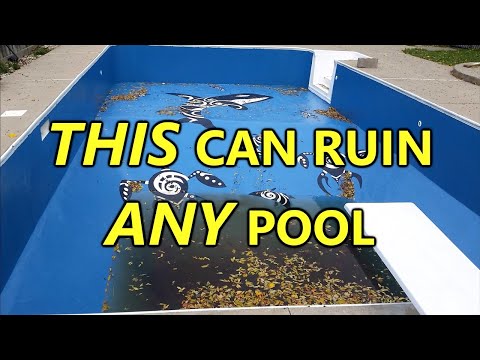
Draining a pool is not a guaranteed failure of the pool...but you can rest assured that you are taking a risk any time you drain a pool regardless of what kind of pool you have. Just because you have done it before, or your neighbor Bob drains his pool every year and it is fine, I strongly encourage you to protect your investment and speak with a local professional before you attempt to drain your pool for yourself.
If I can save even one person from experiencing a total failure of their pool then it will be worth it! Do not risk your pool or your money by draining without taking the proper steps first!
Top content from www.SwimmingPoolSteve.com
Pool and spa chemistry crash course
New pool owner guide
The Swimming Pool Steve blog
Have a question - ask Steve

Swimming Pool Steve is an award winning, second generation swimming pool specialist from Ontario Canada and one of the most trusted voices in the swimming pool industry. With over 20,000,000 views on the Swimming Pool Steve YouTube Channel, winner of the Pleatco Pool & Spa Industry Leadership award and author of hundreds of pool and spa articles both online and in print. Steve is committed to helping pool and spa owners as well as pool and spa industry workers learn more about the technical side of building, renovating, repairing and maintaining all types of swimming pools and spas. Follow Swimming Pool Steve on Facebook, Twitter and YouTube.
Paid PDF Books From Swimming Pool Steve
 Steve's Pool Survival Guide
The Swimming Pool Steve Pool Survival Guide is intended to help pool owners understand their pool and pool equipment better, understand water chemistry, water testing and chemical corrections to the water, troubleshoot the most common pool problems and have confidence in interacting and caring for their pool in the fastest possible frame of time. Also covers pool safety, things to avoid and how to operate your pool more efficiently.
 Salt Water Recommendations
Are you considering upgrading to salt water in your pool? In this paid PDF Steve talks about which pools should avoid using salt water. Find out concerns about using salt in your pool but also the potential benefits of salt water. Finally hear which specific brand and model of salt chlorine generator Steve thinks is the best option currently available to pool owners and how to choose the right size salt system for your pool.
 New Pool Heater Buyer's Guide
In this guide Swimming Pool Steve will help you to better understand your heater options as well as which would be best suited for your pool. Learn about BTU output and sizing of both gas/propane heaters as well as electric heat pumps for residential swimming pools. You will also learn about which specific brands and models of currently available pool heaters Steve likes to recommend. If you are thinking of adding a new pool heater to your equipment pad this buyer's guide would be a useful resource to help you make a more informed buying decision.
 New Pool Installation Value Guide
This is a value shopping guide written by Swimming Pool Steve to help home owners hiring for a new pool installation to get the maximum value for their investment with tips about how to protect your interests during the vetting, hiring and pool installation process. Anyone serious about having a pool installed will find value in this guide. Pool installers will sell the pool package that is best for them - not for you! Become an informed value shopper with this PDF guide.
Endorsed Brands From Swimming Pool Steve
The following links and products are to affiliates of the Swimming Pool Steve website. These are brands, products and services hand selected by Steve for endorsement. Please note that these endorsements can include monetary compensation, affiliate links and referral fees to Swimming Pool Steve, however there is zero additional cost to you should you use one of these products or services. Income generated from these links helps to keep this pool and spa resource available for everyone. To have your product or service considered for listing here as an endorsed brand email SwimmingPoolSteve@gmail.com.
Amazon Disclosure Statement - As an Amazon Associate I earn from qualifying purchases.

www.PoolPartsToGo.com
New Black + Decker variable speed pumps are available online from www.PoolPartsToGo.com and they are a drop in replacement for many popular pump models including Pentair Superflo and Hayward Super Pumps. With an adjustable platform base, union connections included and a very strong warranty these pumps offer an impressive value to pool owners.
- Swimming Pool Steve