
Why Variable Speed Pumps Should Run 24/7
SwimmingPoolSteve.com is user-supported. In order to keep this resource about pools and spas available for free to all readers I earn commissions for purchases made through links on this page. For more information see the full disclaimer page.
How many hours per day do you run your variable speed pool pump? Do you turn yours off for part of the day to save on electricity costs? For decades this was the best way to lower the cost of operating your pool filtration pump. Many pools could meet their turnover requirements, or at least stay clear, while only operating the pump four, eight or twelve hours per day. In fact running your pump 24 hours per day was a guaranteed way to waste huge amount of electricity and you would never run your pump 24 hours per day unless your pool was absolutely gigantic, and/or you just do not pay attention to your electricity bills all that closely. But you would have to try pretty hard to ignore the alarming costs of running a single speed pump around the clock!
An average house can double the amount of electricity it uses per month simply by adding a single speed pump that runs 24/7. That is how much electricity pool pumps can use and that is just how much money we are talking about costing or potentially saving on your swimming pool operating costs...half of your total electricity bill! Of course this represents sort of a worst case scenario of operating costs. Most pool owners do not have a single speed pump that runs 24/7 but you bet there are some. By the end of this article I will teach you why your old pump was costing you so much money and how you can drastically reduce how much you spend on electricity to run your pool pump by never turning off your pump. Yes you read that correctly. Science incoming:

Pump affinity laws - The affinity laws for pumps is a way of expressing the mathematical relationship between variables such as power consumption, motor speed, impeller diameter and resistance to flow. When all variables remain the same except the speed of the motor (and electrical consumption) the pump affinity laws show that for a motor RPM increase by double there is an increase in power consumption of eight times. This also works in reverse as well such that a speed reduction by the motor of half will result in a power consumption reduction of eight times. There is a non-linear relationship between motor speed and power consumption which we can utilize for incredible power savings. This is the science behind why running your variable speed pump for 24 hours is beneficial to you in terms of lowering your total operating costs and since pool pumps use motors rated for continuous duty this means it does not hurt them to run 24/7.
But if you turn down the pump RPM the pool will not get enough filtration!

The first objection that you might hear from someone about variable speed pumps is that the filtration of the pool is compromised by having such low flow. First, this comment is merit based, but inaccurate. The reality is that pools do need adequate filtration and turning down the flow too much could compromise the quality of the pool filtration. But how much is enough flow? This is the real question.
What is very important to understand is that flow rate changes more or less linear along with the motor RPM. So reducing a motor speed by half will also reduce flow by about half, but again the power consumption is reduced by eight times. Pools do need periods of time at medium and high speed operation for effective filtration and circulation of the pool. However this is all part of an effective variable speed operating schedule of which you should have periods of time at low speed, medium speed and high speed to meet the individual needs of the pool.
High speed operation - Pools do need to have lots of water flow and filtration every day but how much is enough? This is essentially an unanswerable question since every pool is different and the requirements for every pool are unique. To attempt to answer in a meaningful way high speed operation of your pump is critical to the functioning of your pool skimmers. The skimmers draw in water from the surface of the pool which is effective at straining surface debris. If the flow rate on your pump is not high enough the skimmer(s) may fail to function properly or well enough resulting in an increased amount of floating debris. Eventually the floating debris will get waterlogged and will sink to the bottom of the pool. You also need high speed pump operation in your pool sufficient to satisfy the flow and time requirements for all of the peripheral devices installed on your pool. High speed operation costs the most per hour but also moves the most amount of water. Still, despite the larger flow volume, high speed operation represents the least efficient overall filtration of your water.
Medium speed operation - Pools need high speed operation as discussed above but it should be noted that the cost for high speed pump operation is so high that you should definitely give the pool what it needs for high speed operation, but not a minute more. High speed operation of your pump is going to make up the bulk of your daily running costs even if you only run it at high speed for a few hours. This is why medium speeds are important as well. Usually pools have things like gas heaters, salt chlorine generators, electric heat pumps and other peripheral devices that all require adequate flow in order to operate. Some of these devices like salt systems and heat pumps need fairly long operating hours in order for them to do the work they need to do every day. The medium operational speeds should be set to cover the flow requirements and volumes any of these peripheral devices that you have. While every pool is unique you might try something along the lines of double the amount of time of high speed operation for your medium speed operation. If you run on high speeds for four hours per day then try eight hours for your medium speeds as a starting point to dial in your system.
Low speed operation - Low speed operation of your pool pump is where the savings really start to rack up with variable speed pumps. The amount of power that is consumed at 500 to 1000 RPM's is a tiny amount especially when compared to the high speed operation values. However the flow rates are surprisingly respectable even at these miniscule pump RPM speeds. The low RPM operation of your pump is the time during which your operating costs are the least. This is partly due to the affinity laws for pump energy conservation but also because water moves very efficiently at low speeds. At high speeds and even at medium speeds in many systems the flow of water will be significantly disrupted by friction and turbulence introduced by the velocity of the water as well as the choice of fittings used. Low speed operation is the best of both worlds in that your pump energy costs are drastically slashed, and the efficiency of your moving water is at its highest. To see some examples for maximum efficient flow rates for PVC pool pipes you can read this article about pipe size for pools.
The reason why you must run your variable speed pump 24 hours per day is for maximum savings. If you turn off your pump at any point during the day this is another hour of time that you could have been running your pump at low speed and getting your most efficient filtered water. Even if you already have filtered your pool enough for the day you still would not want to turn your pump off, you would want to amend your 24 filtration schedule to include 24 hours of operation, and then you would reduce your medium and high speed operating RPM's slightly which would actually reduce your daily power consumption considerably.
When designed properly you will have a filtration goal of three times the volume of your pool through the filter every 24 hours which equals about 95% of the water in your pool being filtered at least one time. If you are meeting this filtration goal before the end of 24 hours then you can try reduce the period of time, or the amount of RPM used for low, medium and high speed operation somewhat.
24 hour filtration goal = 40,000 gallons
2 hours @ 3000 RPM, 82 GPM, 1.500 kW/h = 9840 gallons / 3 kWh ($0.39)
4 hours @ 1500 RPM, 41 GPM, 0.27 kW/h = 9840 gallons / 1.08 kWh ($0.14)
18 hours @ 750 RPM, 22 GPM, 0.096 kW/h = 23,760 gallons / 1.72 kWh ($0.22)
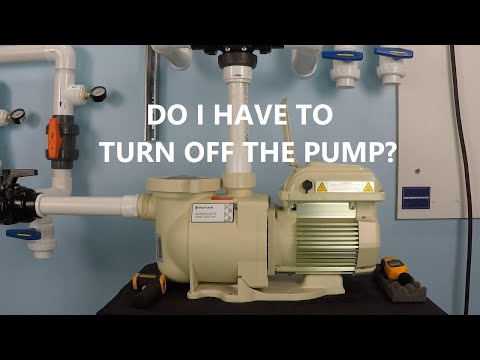
You can see these numbers for flow and power consumption in this video about pump filtration schedules and the conclusions that we can draw are pretty clear. The long hours at low speed easily provide the most value for your filtration as the total power consumption is half of what was consumed at high speed, despite high speed only accounting for two hours of operation. Using the national average of $0.13 per kWh of power consumption the two hours at high speed cost $0.39 where the 18 hours at low speed cost only $0.22 despite pumping almost three times as much water during this period. The math is clear and the science is certain. The only thing left to figure out is how to apply this knowledge to your pool specifically. This will take some trial and error to dial in your flow rates and to meet the flow requirements of your peripheral equipment, but once you have everything dialed in and programed you will be like cruise control to maximum savings. If you turn off a variable speed pump instead of letting it run 24/7 then you are reducing your potential for savings and are not fully utilizing the variable speed technology to your advantage.
Top content from www.SwimmingPoolSteve.com
Pool and spa chemistry crash course
New pool owner guide
The Swimming Pool Steve blog
Have a question - ask Steve

Swimming Pool Steve is an award winning, second generation swimming pool specialist from Ontario Canada and one of the most trusted voices in the swimming pool industry. With over 20,000,000 views on the Swimming Pool Steve YouTube Channel, winner of the Pleatco Pool & Spa Industry Leadership award and author of hundreds of pool and spa articles both online and in print. Steve is committed to helping pool and spa owners as well as pool and spa industry workers learn more about the technical side of building, renovating, repairing and maintaining all types of swimming pools and spas. Follow Swimming Pool Steve on Facebook, Twitter and YouTube.
Paid PDF Books From Swimming Pool Steve
 Steve's Pool Survival Guide
The Swimming Pool Steve Pool Survival Guide is intended to help pool owners understand their pool and pool equipment better, understand water chemistry, water testing and chemical corrections to the water, troubleshoot the most common pool problems and have confidence in interacting and caring for their pool in the fastest possible frame of time. Also covers pool safety, things to avoid and how to operate your pool more efficiently.
 Salt Water Recommendations
Are you considering upgrading to salt water in your pool? In this paid PDF Steve talks about which pools should avoid using salt water. Find out concerns about using salt in your pool but also the potential benefits of salt water. Finally hear which specific brand and model of salt chlorine generator Steve thinks is the best option currently available to pool owners and how to choose the right size salt system for your pool.
 New Pool Heater Buyer's Guide
In this guide Swimming Pool Steve will help you to better understand your heater options as well as which would be best suited for your pool. Learn about BTU output and sizing of both gas/propane heaters as well as electric heat pumps for residential swimming pools. You will also learn about which specific brands and models of currently available pool heaters Steve likes to recommend. If you are thinking of adding a new pool heater to your equipment pad this buyer's guide would be a useful resource to help you make a more informed buying decision.
 New Pool Installation Value Guide
This is a value shopping guide written by Swimming Pool Steve to help home owners hiring for a new pool installation to get the maximum value for their investment with tips about how to protect your interests during the vetting, hiring and pool installation process. Anyone serious about having a pool installed will find value in this guide. Pool installers will sell the pool package that is best for them - not for you! Become an informed value shopper with this PDF guide.
Endorsed Brands From Swimming Pool Steve
The following links and products are to affiliates of the Swimming Pool Steve website. These are brands, products and services hand selected by Steve for endorsement. Please note that these endorsements can include monetary compensation, affiliate links and referral fees to Swimming Pool Steve, however there is zero additional cost to you should you use one of these products or services. Income generated from these links helps to keep this pool and spa resource available for everyone. To have your product or service considered for listing here as an endorsed brand email SwimmingPoolSteve@gmail.com.
Amazon Disclosure Statement - As an Amazon Associate I earn from qualifying purchases.

www.PoolPartsToGo.com
New Black + Decker variable speed pumps are available online from www.PoolPartsToGo.com and they are a drop in replacement for many popular pump models including Pentair Superflo and Hayward Super Pumps. With an adjustable platform base, union connections included and a very strong warranty these pumps offer an impressive value to pool owners.
- Swimming Pool Steve