
Hot Tub Foaming
SwimmingPoolSteve.com is user-supported. In order to keep this resource about pools and spas available for free to all readers I earn commissions for purchases made through links on this page. For more information see the full disclaimer page. By using this website you are agreeing to the terms and conditions.

Do you have a hot tub foaming problem that you want to resolve once and for all? Does your hot tub resemble a bubble bath when you turn on the water jets or air bubbler system? Too much foam in a hot tub is one of the most common problems that spa owners will complain about. When the water first goes in to the spa you notice that there is almost no bubbles or foam at all, but a few weeks or a few months later you can hardly see past the towering wall of bubbles every time you turn on the jets. There are a number of reasons why you could end up having a problem with foam and bubbles in your hot tub and chances are that you will need to make some changes to how to care for and manage your water moving forward.
A hot tub really is a perfect bubble making machine. If you fail to maintain your spa water properly then you almost certainly will end up having a problem with too much foam. So how much is too much? Typically speaking any bubbles that form in the spa while the jets are running should not build on one another - which is to say that a single level of quick-dispersing bubbles on the surface of the water is normal. Bubbles that grow one on top of each other and climb higher out of the surface of the water is not normal. Similarly when you turn off the jets or air bubbler system all bubbles and foam left in the water should completely disperse within 60 seconds or less. If you have persistent foam that tends to hang around longer than a minute or so, then there is likely ways that you can improve your water quality to reduce the amount of foam you are experiencing.
Replacing filters more often - One of the most common causes for too much foam in a hot tub is not changing the paper filters more often. Hot tub filters are usually fairly small, and usually made of paper. Over time these paper filters will absorb sweat, grease, oils and other impurities. It does not take much to saturate these paper filters and if you only change yours once per month or less, as many filter manufacturers suggest you can do, then this might be the cause of your hot tub foam. I tend to change my filters weekly if I use my spa regularly, and my spa never has more than two people in it. If you use yours a lot, or often have four, six or more people in it, then you definitely need to be changing your filters more often. Additionally you need to understand that rinsing the filter with a cold garden hose is not how you clean a hot tub filter. This would do nothing to remove the trapped grease and oils in the paper material. You must use a hot tub filter cleaner, which is a phosphate free detergent that is designed to cut grease and oils, but also designed not to cause foam and bubbles. If you have a problem with foam in your hot tub then the first step you need to take is to change your filters more often.

Soap residue in the spa - Being that a hot tub is a perfect bubble making machine already then you only need to add a drop or two of soap to the water to actuate the machine. So what happens if you jump in a hot tub with soap residue on your bathing suit, or on your skin or hair? You guessed it - too much foam in your spa. This is one of the reasons that showering is important before getting in a pool or hot tub. If you take a quick rinse right before you go in the water this helps to remove detergent and soap residue on your body and on your swim trunks. Long hair specifically can hold residue from shampoo and conditioner that can find its way into your hot tub water. This is also why you are really not supposed to wash your bathing suit very often. If you launder your bathing suit every time you use it then this is almost certainly the source of soap making its way into your spa water.
Low calcium hardness levels - Hard water is harder to lather soap. Soft water is very easy to lather soap. If you have very low calcium hardness levels in your spa then you will have too much foam from even the tiniest residue of soap, or other impurities in the water. This is one of the reasons why you want to maintain a calcium hardness level above zero in your hot tub. Many city supplied water sources are "soft water" and have zero calcium hardness measurable in the water. This is also true for water taps fed from water softener systems. You do not want to fill your hot tub with soft water, nor do you want to fill a hot tub with extremely hard water. If you have either of these extremes it is recommended to have your water trucked in, or more commonly fill your spa partially from the hard water supply and partially from the soft water supply to aim for a middle of the road calcium hardness level. If your hard water supply is of poor or questionable quality due to too many minerals present then you would be further ahead to fill the spa from the soft water supply and manually adjust the calcium hardness level up from zero. The ideal range for calcium hardness in a hot tub ranges from 150ppm to 250ppm.
High levels of total dissolved solids - High levels of dissolved solids in your hot tub will encourage the development of foamy suds any time you agitate the water and introduce air through the bubbler system or jets. Everything that you add to your hot tub water will add to the level of total dissolved solids. This includes organic debris like skin, oils and sweat, but also includes all of the chemical components that you add such as salts and other minerals such as calcium. Over time these TDS levels rise until some negative symptoms begin to appear. The first of these will be foam in your hot tub when you turn on the jets followed by permanently cloudy and turbid water regardless of the chemistry balance or amount of filtering the water gets. While a TDS level of 250ppm is considered to be "normal" there is no such firm rule for how much TDS is too much TDS. The main reason for this is that TDS is a non-specific measurement of all dissolved materials within the water. It does not specify what those materials are. You might have 1000ppm of dissolved salts in the water, which is entirely less bad than 1000ppm of dissolved dog poop. Without a profile of the dissolved solids in the water you can only work with the general guideline that 1000 to 2000 parts per million of dissolved solids is getting pretty high (should be changing water), and above 2500 is beyond the point at which the water will be completely unmanageable. The solution to high levels of TDS is simple - drain and dilute with fresh water. Just be sure to pipe flush before you drain the old water away!
What Gets Rid Of Foam In A Hot Tub?
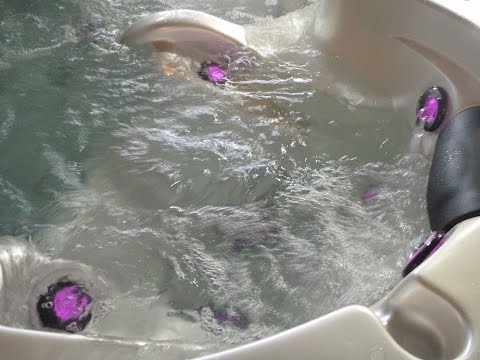
In order to avoid foam in your hot tub you need to change your paper filters often and be sure to use a degreaser to clean the dirty filters. Equally as important is to ensure that the filters are thoroughly rinsed before returning them to the spa. It can be time consuming and difficult to effectively rinse 100% of the detergent residue from the pleats of your filter. Other than just taking your time and being thorough with rinsing your filters, you might find that a filter comb
 helps speed up the rinsing process.
Change the water in your spa often to avoid building high levels of TDS in the water, at minimum once every three months or less, and this will drastically reduce the amount of foam that you get in your water. Be sure to manage your calcium hardness levels and avoid filling and operating your spa with zero calcium hardness like from a water softener. Finally avoid laundering your bathing suit too often, and if possible always shower (or at least rinse) right before you go in the hot tub. While it should go without saying, but it will not, you must balance all of the chemicals in your hot tub and any one that is too far out of range could be the sole cause for excessive foam in your water. So be sure that you have your sanitizer, pH, alkalinity and calcium hardness in the proper ranges at all times. Only once you have done all of these things should you look towards an additive that you can put into the water to help further reduce any instances of unwanted foam.
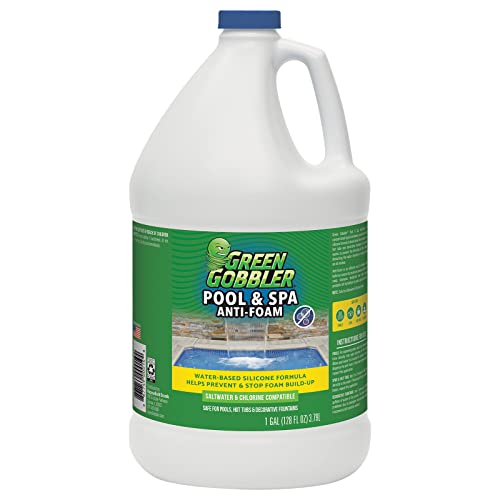
Foam reducer
 - You do not have to look very hard for information about how to fix hot tub foaming problems to come across advice to add a foam reducer chemical to your hot tub. While there are a few kinds of chemical defoamer products available for spas, the majority of the ones you will see on the shelf are some form of liquid silicone. This reduces the surface tension of the water and makes it much harder for bubbles to form and hold together...voila you now have less foam in your hot tub, but you have more liquid silicone. I guess it just depends on what you consider to be an acceptable consequence but for my money, and my health, I prefer not to add any type of liquid silicone to the water. In fact, the general consensus from modern pool and spa owners is that less chemicals is the way to go. So I am confused by how willing people are to squirt anti-foaming chemicals into their spa water when in reality there is a solvable problem within the water that can be resolved in better, healthier ways.

Hot tub enzymes
 - When you have spa water that is chronically foamy and you have read, understood and followed all of the advice above about how to reduce the potential for foam in your water, but you still have some foam problems, then reach for a hot tub enzyme instead of the liquid silicone foam reducer. While enzymes are one of the more expensive individual chemicals for pools and spas, they are also one of the most effective. Enzymes are quite often the secret go-to products that pool and spa professionals use to resolve problematic water issues without just dropping a tanker truck full of liquid chlorine in the water. Pool opening season in cold climate areas will typically deal with water that has turned dark green, brown or black. Enzymes are great for helping to quickly get this water quality situation under control, but that is not where their functionality ends. Using enzymes in hot tub water is a great way to reduce the amount of foam you experience as the enzymes will work to consume oils within the water. This will reduce the frequency at which your paper filters become saturated and help to restore clarity to your water, all in addition to reducing the foam. Enzymes also function by helping the sanitizer (chlorine / bromine) to be effective at killing organic debris in the water, while not being affected by the sanitizer themselves. This reduces the amount of sanitizer that you will need to add to your water, which in turn means that your TDS levels will rise more slowly. A hot tub enzyme works in multiple ways to counteract the things that cause foam to begin with, as opposed to treating the symptom like anti-foaming chemicals.
Essential information you need before getting in a hot tub
How often should I drain my hot tub?
Is there such a thing as a chemical free hot tub?
Why do hot tub covers get so heavy?
Why does my hot tub water smell bad?
10 Popular items hot tub owners buy from Amazon
Top content from www.SwimmingPoolSteve.com
Pool and spa chemistry crash course
New pool owner guide
The Swimming Pool Steve blog
Have a question - ask Steve

Swimming Pool Steve is an award winning, second generation swimming pool specialist from Ontario Canada and one of the most trusted voices in the swimming pool industry. With over 20,000,000 views on the Swimming Pool Steve YouTube Channel, winner of the Pleatco Pool & Spa Industry Leadership award and author of hundreds of pool and spa articles both online and in print. Steve is committed to helping pool and spa owners as well as pool and spa industry workers learn more about the technical side of building, renovating, repairing and maintaining all types of swimming pools and spas. Follow Swimming Pool Steve on Facebook, Twitter and YouTube.
Paid PDF Books From Swimming Pool Steve
 Steve's Pool Survival Guide
The Swimming Pool Steve Pool Survival Guide is intended to help pool owners understand their pool and pool equipment better, understand water chemistry, water testing and chemical corrections to the water, troubleshoot the most common pool problems and have confidence in interacting and caring for their pool in the fastest possible frame of time. Also covers pool safety, things to avoid and how to operate your pool more efficiently.
 Salt Water Recommendations
Are you considering upgrading to salt water in your pool? In this paid PDF Steve talks about which pools should avoid using salt water. Find out concerns about using salt in your pool but also the potential benefits of salt water. Finally hear which specific brand and model of salt chlorine generator Steve thinks is the best option currently available to pool owners and how to choose the right size salt system for your pool.
 New Pool Heater Buyer's Guide
In this guide Swimming Pool Steve will help you to better understand your heater options as well as which would be best suited for your pool. Learn about BTU output and sizing of both gas/propane heaters as well as electric heat pumps for residential swimming pools. You will also learn about which specific brands and models of currently available pool heaters Steve likes to recommend. If you are thinking of adding a new pool heater to your equipment pad this buyer's guide would be a useful resource to help you make a more informed buying decision.
 New Pool Installation Value Guide
This is a value shopping guide written by Swimming Pool Steve to help home owners hiring for a new pool installation to get the maximum value for their investment with tips about how to protect your interests during the vetting, hiring and pool installation process. Anyone serious about having a pool installed will find value in this guide. Pool installers will sell the pool package that is best for them - not for you! Become an informed value shopper with this PDF guide.
Endorsed Brands From Swimming Pool Steve
The following links and products are to affiliates of the Swimming Pool Steve website. These are brands, products and services hand selected by Steve for endorsement. Please note that these endorsements can include monetary compensation, affiliate links and referral fees to Swimming Pool Steve, however there is zero additional cost to you should you use one of these products or services. Income generated from these links helps to keep this pool and spa resource available for everyone. To have your product or service considered for listing here as an endorsed brand email SwimmingPoolSteve@gmail.com.
Amazon Disclosure Statement - As an Amazon Associate I earn from qualifying purchases.

www.PoolPartsToGo.com
New Black + Decker variable speed pumps are available online from www.PoolPartsToGo.com and they are a drop in replacement for many popular pump models including Pentair Superflo and Hayward Super Pumps. With an adjustable platform base, union connections included and a very strong warranty these pumps offer an impressive value to pool owners.
- Swimming Pool Steve